
[Editor’s NOTE: In Anno Domini 2024, the Feast of the Annunciation of Our Lord, celebrated on the 25th of March, takes place next week. In his BFP, however, Laache places Annunciation Day on the Fifth Sunday in Lent.]
162. Friday after Annunciation Day.
“My God, be not far from me;
for trouble is near; for there is none to help.”
Matthew 27, 45-49. Now from the sixth hour there was darkness over all the land unto the ninth hour. And about the ninth hour Jesus cried with a loud voice, saying, Eli, Eli, lama sabachthani? that is to say, My God, my God, why hast thou forsaken me? Some of them that stood there, when they heard that, said, This man calleth for Elias. And straightway one of them ran, and took a sponge, and filled it with vinegar, and put it on a reed, and gave him to drink. The rest said, Let be, let us see whether Elias will come to save him.
❦
To be forsaken of God is to be damned. Was it the intent of God, then, to deal thus with his Son? Did this take place in accordance with the Father’s positive will? How could it be otherwise than in accordance with the will of him without whom not even a sparrow falls to the ground? The scripture expressly declares that when the Son tasted death for us all, this was done according to the gracious will of God. (Hebrews 2, 9). Or what power other than his love could have caused the almighty Father to forsake his well beloved Son? It was done for our sake, in obedience to his own gracious purpose. The Father forsook the Son in the agony of death, tempted, reproached and tortured by devils and men. And the Son knew that he was forsaken, and fully realized the horror of it; the darkness of eternal death settled down on him, and his soul was racked with all the terrors of hell. The whole penalty which the world had deserved is now executed on him; all the misery with which all men had deserved to be punished forever and ever is poured into one cup, and he empties it to the dregs, and tastes all the bitterness of God’s fiery wrath which it contains.
I know not what transpired in heaven and in the soul of the Redeemer to produce this sensation of being forsaken of God; but I shudder at the thought, and a dark dread falls on my soul, as it did on nature in those last hours. Here it becomes plain to me that there is no flaw in the doctrine of Saint Paul, and of Luther, in regard to the vicarious atonement of Jesus. He that does not see this is more blind than was the night which fell on the land when Jesus died.
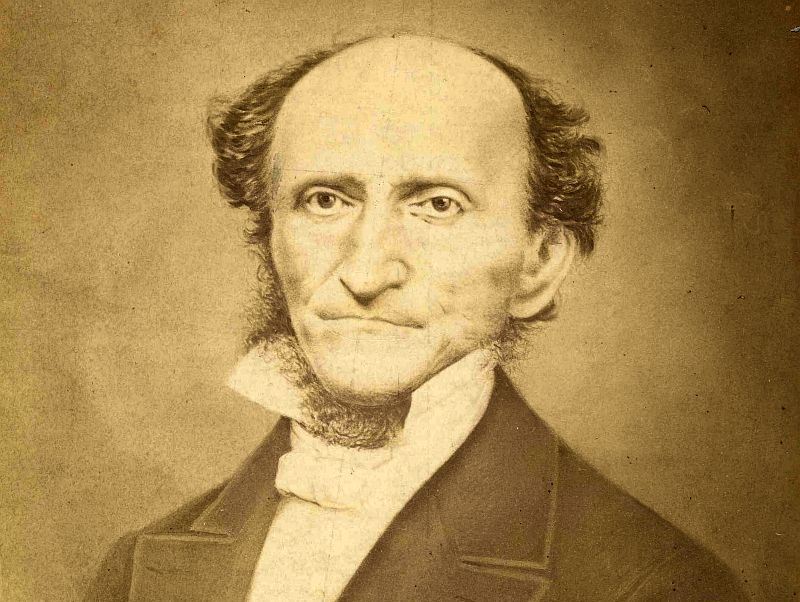
— Wilhelm Loehe
The power of sin, the severity of justice, the agony of the damned, the greatness of mercy, the eternal value of my soul in the sight of God, — all these are in nothing revealed more clearly than in the words of the Lord: “My God, my God, why hast thou forsaken me?” But how can any poor words of mine, wretched sinner that I am, do justice to this subject? I sink down at the foot of thy throne with a profound sense of my unworthiness to be redeemed at so great a cost, and with my heart full of thanksgiving and worship.
Since thou, my Jesus, didst thus cry out, I am able in the midst of death to say with a glad voice: Blessed be thou for the ineffable grace of redemption. Justice is satisfied; condemnation has passed away. Nothing shall separate me from thy love; life everlasting is mine. Together with all the saints I shall be with thee, and praise and thank thee forevermore. Amen.
We held him as condemned of heaven,
An outcast from his God;
While for our sins he groaned, he bled,
Beneath his Father’s rod.
His sacred blood hath washed our souls
From sin’s polluting stain;
His stripes have healed us, and his death
Revived our souls again.

Leave a Reply