
348. Monday after Thirteenth Sunday after Trinity.
Good Holy Spirit, give us
the liberty in Christ. Amen.
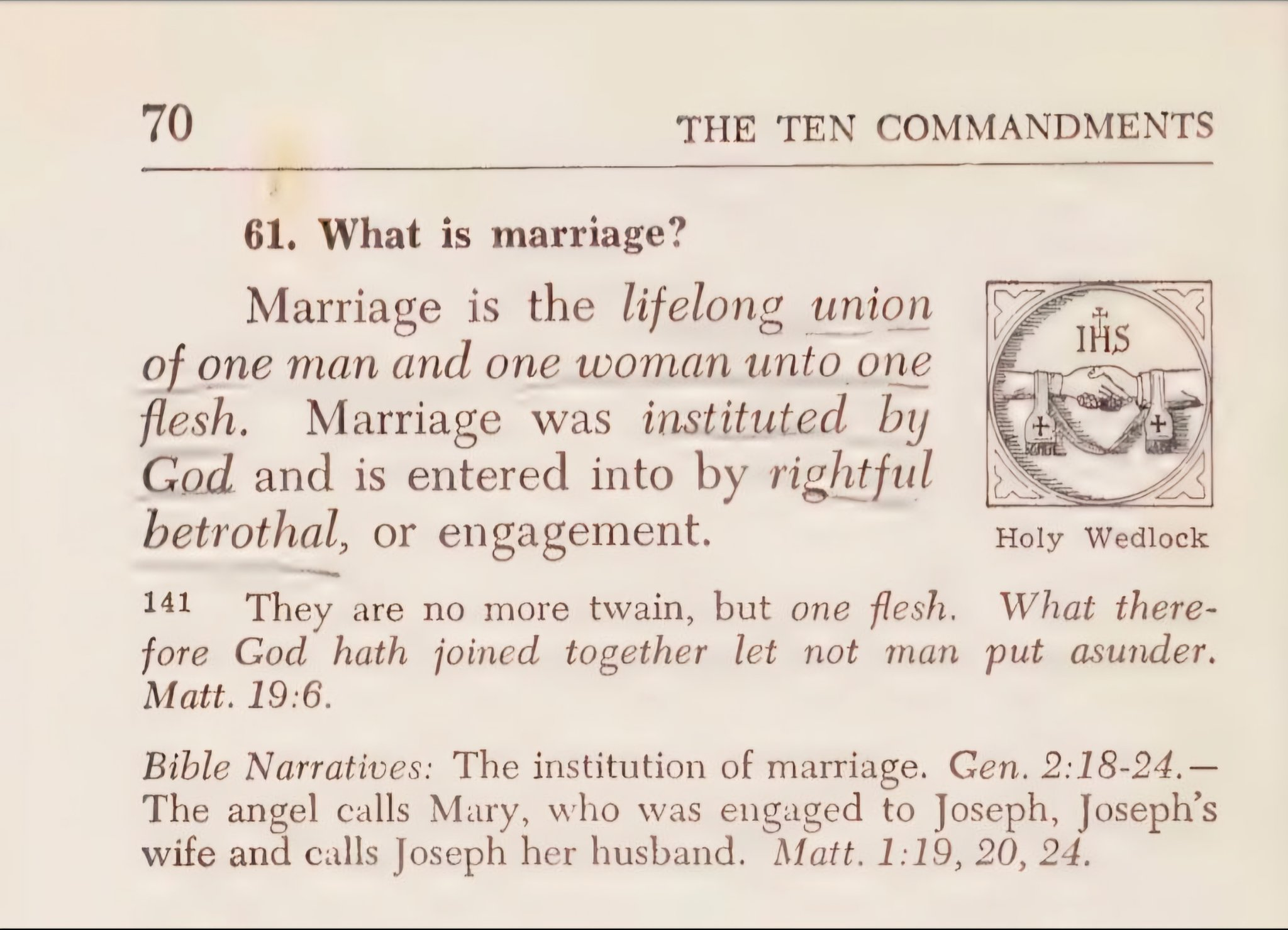
Romans 7, 1-6. Know ye not, brethren, (for I speak to them that know the law,) how that the law hath dominion over a man as long as he liveth? For the woman which hath an husband is bound by the law to her husband, so long as he liveth; but if the husband be dead, she is loosed from the law of her husband. So then if, while her husband liveth, she be married to another man, she shall be called an adulteress: but if her husband be dead, she is free from that law; so that she is no adulteress, though she be married to another man. Wherefore, my brethren, ye also are become dead to the law by the body of Christ; that ye should be married to another, even to him who is raised from the dead, that we should bring forth fruit unto God. For when we were in the flesh, the motions of sins, which were by the law, did work in our members, to bring forth fruit unto death. But now we are delivered from the law, that being dead wherein we were held: that we should serve in newness of spirit, and not in the oldness of the letter.
❦
When Christ was here in his state of humiliation, he was under the condemnation and dominion of the law (Gal. 4, 4; 3, 13); by his obedience unto death, however, the power of the law to judge and its right to reign have been destroyed; by his death he is set free from the law. But it was for us that the Son of God was born under the law, and was made a curse, so his liberty from the law is our liberty. This blessing is enjoyed by the faithful. They are baptized into the death and resurrection of Christ, and are thus united with him as he died, and united with him as he again lives. Without Christ they were under the law, bound to keep it, and cursed forever. But now that they are one with Christ (Eph. 5, 30-32), they are by his death loosed from the law, in like manner as a woman is loosed from her husband when death has parted them.
This liberty of the faithful from the law is a very excellent thing. In the first place, there is no obligation resting on them to keep the law, in order that they may be justified before God. Satan cannot accuse them of any transgression of the law. Christ has fulfilled the law perfectly, and this is counted as having been done by them that believe in him; he has suffered the whole punishment, and thus they have suffered it also. They are free from the law which says: “Keep the commandments, and thou shalt be justified.” They are free from it as completely, as the woman is loosed and free from her husband when death separates her from him. The law has nothing whatever to do with the question of my right to salvation. I was a transgressor, and my life is still imperfect; but this can no more condemn me. It no more affects my right to salvation, than it affects the right of my Lord Jesus; for I am no longer under the dominion of the law, but have by my baptism entered the house of the precious bridegroom of my soul; and in that house there is a dispensation entirely different from the law’s command, “do this, and thou shalt live.” — In the second place, the believers have a free and happy conscience, and serve God and all men with joy and delight in the new life of the Spirit. They do not flee from God, but to him; and do his will, not as bondmen, but as children. Herein they are not, however, perfect, as they are in respect to their righteousness in Christ. All Christians do not have so clear a conception of their state of grace that they know how excellent is the liberty in which they live; and neither is the truth equally clear at all times to the same person. The sins which cling to him obscure his vision, and give the devil occasion to tempt him. He is tempted to put on again the yoke; — but then the sun of mercy shines out once more, the soul is with its bridegroom; and the prize of victory, the spirit of liberty, is won. That which Paul here teaches is a matter of the greatest importance. While an earnest man clings to his own righteousness, he has the fear of death in his heart; for his good works are nothing but the forced obedience of the slave. But when you understand what grace is, and believe yourself quickened with Christ, and know that you are free, and the spirit in you cries out Abba, Father; then you bring forth fruit before God unto eternal life. The Spirit of Christ, which makes us free from the law, writes the law in our hearts.
God, teach us this through living experience, by thy Holy Spirit, for Jesus’ sake. Amen.*
Thou, O Christ, art all I want;
More than all in thee I find:
Raise the fallen, cheer the faint,
Heal the sick, and lead the blind.
Just and holy is thy name;
I am all unrighteousness:
False and full of sin I am;
Thou art full of truth and grace.
[TLH 345 (listen here); alt. ELH 209]
* Here the head of the family says a short morning or evening prayer in his own words, and closes with the Lord’s Prayer and the Benediction. This is to be done every day. If the stanzas are not sung, they may be read in their proper place before the impromptu petition and the Lord’s Prayer.

Leave a Reply