
314. Ninth Sunday after Trinity. I.
Instruct us, Lord Jesus,
thou heavenly wisdom. Amen.
Gospel Lesson, Luke 16, 1-9. And he said also unto his disciples, There was a certain rich man, which had a steward; and the same was accused unto him that he had wasted his goods. And he called him, and said unto him, How is it that I hear this of thee? give an account of thy stewardship; for thou mayest be no longer steward. Then the steward said within himself, What shall I do? for my lord taketh away from me the stewardship: I cannot dig; to beg I am ashamed. I am resolved what to do, that, when I am put out of the stewardship, they may receive me into their houses. So he called every one of his lord’s debtors unto him, and said unto the first, How much owest thou unto my lord? And he said, A hundred measures of oil. And he said unto him, Take thy bill, and sit down quickly, and write fifty. Then said he to another, And how much owest thou? And he said, A hundred measures of wheat. And he said unto him, Take thy bill, and write fourscore. And the lord commended the unjust steward, because he had done wisely: for the children of this world are in their generation wiser than the children of light. And I say unto you, Make to yourselves friends of the mammon of unrighteousness; that, when ye fail, they may receive you into everlasting habitations.
❦
Insofar as he was unjust, this unfaithful steward is an example for our warning; but insofar as he was wise and resolute, he is still more an example for our instruction and humiliation.
In respect to the first point the parable teaches: Remember that you shall give an account. You have, to be sure, been made ruler over all that you have, things bodily and things spiritual; still nothing is yours, but all the Lord’s; and you must use it according to his will, to his honor, and to the true benefit of yourself and your neighbor. Bear in mind that the time is short, and the responsibility heavy. Let the outcome of this faithless steward’s wicked way rouse you betimes, that these words may not at last sound in your ears like the crack of doom: “Give an account of thy stewardship; for thou mayest be no longer steward.”
In respect to the second point the parable teaches: Be wise, and be quick to use your time and all that you have for the promotion of your eternal welfare. This is the leading thought in the parable. See how wise and resourceful the children of the world are in their generation; how they make use of every opportunity, and how they sacrifice name and reputation, nay justice and conscience, in order to secure earthly advantages. Should not you, then, the children of light, be still more zealous to win the treasures of eternity? But the men of the world shame you! The unjust steward had but a little time remaining in which he could freely make disposition of the property committed to his charge; but he knew how to turn this short respite to his advantage. He treated his lord’s debtors in such a way as that he might not be without friends when he was forced to leave the service. — The right use of the earthly things is the principal lesson which Jesus through this parable wants to teach his disciples. “Make to yourselves friends of the mammon of unrighteousness; that, when ye fail, they may receive you into everlasting habitations.” Use the temporal things, to which there always adheres some measure of unrighteousness, and by which so many are robbed of true happiness; use them without stint in giving to your fellow mortals, whom Jesus has bought with his blood; with the simple trust that they are, or will become, children of God; for what you do unto them you do unto Jesus himself, and these perishable things are turned into eternal treasures of love and the bliss of fellowship in heaven.
The wisdom of Jesus as a teacher is incomparable. He teaches us to transform the mammon of unrighteousness into eternal and heavenly treasures. The mammon of unrighteousness! The name accurately expresses the thing; but Christ teaches us to use even this mammon in such a way that it is changed into true, precious, blessed wealth; and this he lets the unjust steward teach us by his example! To the world, what foolishness!
Lord Jesus, give us the wisdom and miraculous power of love; and let our whole life and all that we have be devoted to its service. Give us, needy paupers that we are, this wealth; and give us poor fools this wisdom. Amen.*
As a shadow life is fleeting;
As a vapor so it flies:
For the bygone years retreating,
Pardon grant, and make us wise;
Wise that we our days may number,
Strive and wrestle with our sin;
Stay not in our work nor slumber
Till thy holy rest we win.
[suggested tune: Ringe recht, TLH 565; listen here]
315. Ninth Sunday after Trinity. II.
God of Israel, be thou
the God of our heart. Amen.
Epistle Lesson, 1 Corinthians 10, 6-13. Now these things were our examples, to the intent we should not lust after evil things, as they also lusted. Neither be ye idolaters, as were some of them; as it is written, The people sat down to eat and drink, and rose up to play. Neither let us commit fornication, as some of them committed, and fell in one day three and twenty thousand. Neither let us tempt Christ, as some of them also tempted, and were destroyed of serpents. Neither murmur ye, as some of them also murmured, and were destroyed of the destroyer. Now all these things happened unto them for ensamples: and they are written for our admonition, upon whom the ends of the world are come. Wherefore let him that thinketh he standeth take heed lest he fall. There hath no temptation taken you but such as is common to man: but God is faithful, who will not suffer you to be tempted above that ye are able; but will with the temptation also make a way to escape, that ye may be able to bear it.
❦
“Be not idolaters,” says the apostle, and points to the warning example of the Israelites who “sat down to eat and drink, and rose up to play.”
What does this “eat and drink and play” have to do with the question of idolatry? In Exodus 32, from which chapter the passage is taken, the eating and drinking and playing had, to be sure, some connection with idolatry; for it was at the feast in honor of the golden calf that they ate, drank, and played. But when Paul wishes to warn against idolatry, would it not have been more reasonable to have made reference to the first seven verses of that chapter, in which an account is given of the golden calf itself and the sacrifice offered to it? Why does he emphasize this circumstance, that they ate, drank, and played? Well, there is a good reason for it. I have in mind the festivals of the living God in the Old Testament, when people were happy, and ate, and drank, and sang, and played in honor of the Lord. And, then again, I have in mind our festivals, Christmas and Easter and Pentecost, when people also eat and drink and enjoy themselves. They then appeal to the accounts in the Old Testament as a justification of their banquets and drinking bouts and games. “There is no idolatry in it; they do only that which was done of old to the honor of God.” And yet by this means people are led astray!
It is true that the early Christians were in the habit of congregating and “breaking bread” together, and allowing body and soul to rejoice in the living God. But these feasts were different from those in vogue among the Christians of the present day. Joy in the living God is not the modern fashion on festival occasions; say what you will, your conscience recognizes the distinction. Your eating and drinking degenerates into riotous living; and then you do not eat and drink as before God. You do not converse about the goodness of God and the love of Christ; but you forget God, and take his holy name in vain. And then, your sports, your songs and dances! I would on no account deny to any the right to indulge in innocent pleasure; but do not pretend that our customary sports and games are of an innocent character! — You commit sin; and this sin is the pleasure to which you look forward with joyful anticipation! You will not, I hope, seriously pretend to compare yourselves with the first Christians and the pious Israelites. In your hearts you will finally be forced to admit that you serve the devil on the festivals of the Lord; for God can have no pleasure in them. Then you are idolaters, and the words of Paul fit your case, when he says, in the first verse of our text, that “these things were our examples.” Pray read the whole chapter, and weigh it well for your own good.
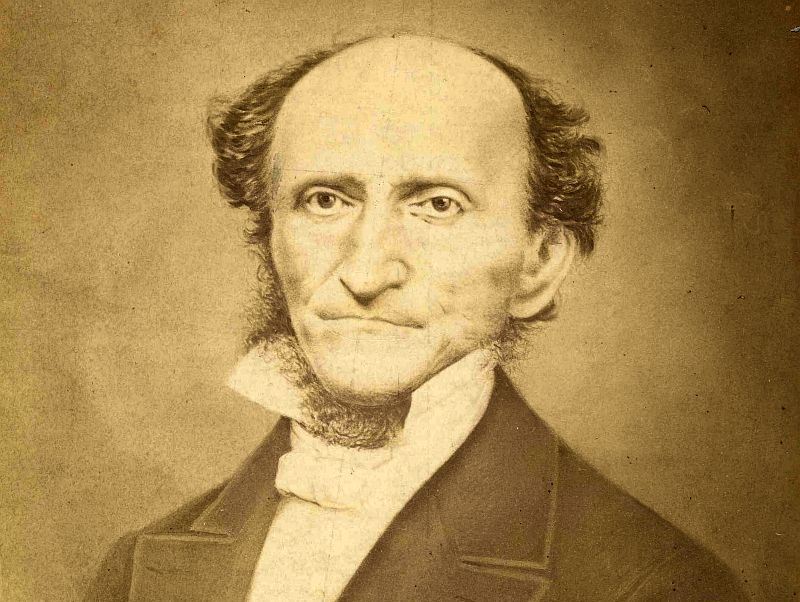
— Wilhelm Loehe
Merciful God, give us holy earnestness. Teach us to enjoy thy gifts with Christian temperance, and to have our joy in praising thee, and in having compassion on the needy. Amen.*
No sinful word, no deed of wrong,
No thoughts that idly rove,
But simple truth be on our tongue,
And in our heart be love.
And grant that to thine honor, Lord,
Our daily toil may tend:
That we begin it at thy word,
And in thy favor end.
[suggested tune: St. Agnes, TLH 361; listen here]
* Here the head of the family says a short morning or evening prayer in his own words, and closes with the Lord’s Prayer and the Benediction. This is to be done every day. If the stanzas are not sung, they may be read in their proper place before the impromptu petition and the Lord’s Prayer.

Leave a Reply