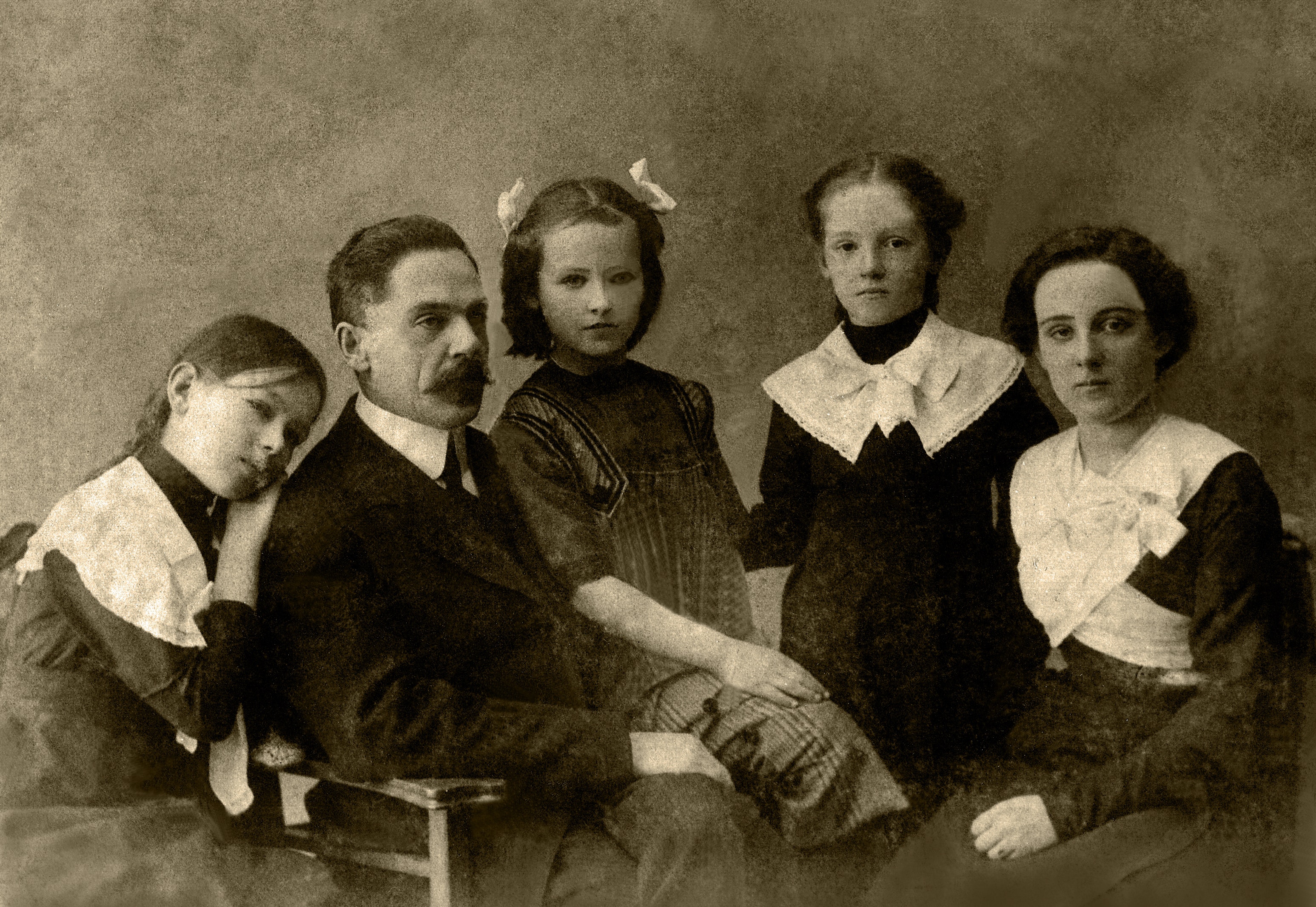
In making a previous post I realized that some of the surrounding articles might be of varying interest also, and since I couldn’t decide which to leave out, I decided to post a couple of pages worth of Der Lutheraner so that those who don’t read German well enough to do so can get an idea of what it’s like to peruse a portion of that publication.
The following is a continuous sequential selection from pages 37-39 of Der Lutheraner vol 28 (1871) No. 5 (December 1).
The Times of the Church
The obligation to adhere to the confessions, which is required of every Lutheran preacher upon assuming office, has often been loudly decried by local sects as a form of confessional and conscience coercion, yet these sects do the same. Indeed, in the “Christian Messenger” of November 15, we read that the “Evangelical Association” (the so-called Albrechtsleute) requires every teacher in their theological institutions to sign a declaration, not only upon taking office but also annually thereafter in the presence of the board of trustees: “I hereby solemnly promise to uphold and maintain the constitution of the Biblical Institute” (as they call their preachers’ seminary) “as a school of biblical theology in accordance with the doctrines and church order of the Evangelical Association, and I will teach nothing that is incompatible with or could undermine these doctrines and church order, as long as I am employed as a teacher at the Institute.” The trustees must also sign the first part of this. We do not criticize this, but we declare that it is inconsistent and unjust for the sects to complain about the fact that in the Lutheran Church, too, every teacher is strictly bound to its doctrinal confession. W[alther].
The General Council, at its last meeting on November 2 and the following days, did not make a definitive statement regarding the “four points,” despite the request of the Michigan Synod, but referred the matter to the district synods. The Iowa Synod, however, has not abandoned its “waiting stance” toward the Council; rather, it has declared that, despite remaining outside the door of the distinguished assembly (seemingly influenced by the unfortunate oversight of the Missouri Synod), it is “determined to stand by the Council through thick and thin,” as reported by the “Lutheran” on November 16. This may seem puzzling to some, but not to us; this behavior is, in fact, quintessentially Iowan. W[alther].
Canada. From the “Lutheran People’s Paper”, published by pastors of our synod in Canada, we learn that the local Missouri Special Conference has resolved to propose a three-day free conference in Berlin (Canada) to discuss doctrinal differences with the pastors of the Canada Synod. Pastor A. Ernst in Elmira announces this on behalf of the Special Conference, suggesting that the free conference take place on January 16, 1872, and the following days. May God grant grace and success to our dear brothers in the neighboring country for their godly endeavor, in the name of Christ! W[alther].
Insurance Companies. The “Joyful Messenger” of November 7 expresses the following view on insurance companies: “In our day, it has become fashionable to place much trust in people and to rely on flesh as one’s strength, thereby turning the heart away from the Lord. This category includes the various insurance companies, both fire and life insurance. When one faces distress or trouble, insurance companies are supposed to help; if a house burns down or someone dies, fire and life insurance step in. In itself, there may be nothing wrong with this, and it may often help people in times of need, but it frequently becomes a snare, leading to a sense of security and distrust in God. The great fire in Chicago has once again proven that all such institutions are unreliable. The vast majority of fire insurance companies have gone bankrupt, and the insured receive nothing or very little. The same applies to life insurance companies as a whole. It may be that they help some in times of need, but, for example, if a plague or other contagious disease sweeps away thousands upon thousands, how will they survive? They must fail just as surely as the fire insurance companies. We believe that a Christian should place his entire trust in God, do his duty, and trust in God’s rule, as the ancients did before modern insurance companies became God’s representatives on earth. For someone without faith in God, it may be fitting to rely on human inventions and speculations. For our part, however, we trust that our God will continue to provide for us and our descendants as He has done thus far.”
The Old New York Synod, which still bears the misleading title “New York Ministerium,” as if only pastors are represented in it and laypeople are excluded, passed a highly dangerous resolution during its last session. Since several congregations have separated from this body in recent years for the sake of the confession, a law was enacted to prevent such occurrences in the future, stating that no congregation may amend its constitution without the approval of the synod’s president. Now the synod may decide whatever it wants; it may fall into false doctrine as it pleases, yet no congregation, even if it must reject the synod’s teachings, is allowed to separate from it. How does this align with God’s Word, such as Titus 3:10? The New York Synod must at least admit that it is capable of falling into error. The notions of synodical fellowship in the New York Synod must indeed be peculiar. Unity in faith and the resulting conduct does not seem to be required, only the adoption of the same constitution and church governance. “Just like us,” the great unionist Hoffmann in Berlin would say. Thank God that in America, such attempts to bind congregations have little chance of actual enforcement! For if a congregation wishes to separate for the sake of conscience, no person, and least of all such a paragraph, can force it to remain in its previous affiliation. This is what happens when people prioritize not the truth and unity in it, but rather amassing the largest possible group. If a congregation leaves the General Synod and joins the Council, it is welcomed with joy. But if another wishes to leave the Council and join, say, the Missouri Synod, efforts are made to hold it back against its will. Why? Well, “that’s an entirely different matter.” (Wisconsin Congregation Paper.)
The Roman Idol. On September 16, at the opening of the Westphalian Synod, Royal Commissioner General Superintendent Dr. Wiesmann reported that the following was recently said verbatim from a Catholic pulpit: “Our songs rejoice in him, millions of Christians call out to him with a thousand voices” (why not a million voices?) “Honor and praise to the Holy Father, eternal glory and splendor to the one who sits on the throne of God; Hosanna!” A church weekly paper, “La Semaine religieuse de Tournai” in Belgium, condemns the indecision of the Catholic ministry and fabricates the following sentence: “The living Christ is the one to whom it was said: I am with you always; whoever hears you hears me, whoever rejects you rejects me—the one in whose infallible mouth the incarnation of the Word continues on earth, the holy old man [der heilige Greis] whose throne has been transformed into a Golgotha.” This was calmly accepted in Belgium without any objection. For the infallibility of a human necessarily presupposes the attribution of divine qualities. (Münkel’s New Times.)
A Form of Usury is, as is well known, often practiced by those who rent out houses. The “Pilgrim” recounts the following incident about a Berlin usurer of this kind: “A few days ago, a well-to-do citizen and homeowner celebrated his birthday in a grand manner; various gifts arrived, including a small, well-sealed, and locked box delivered by the postman. The recipient opened it with joy, but who can describe his shock when he pulled out a rope with a note attached bearing the less-than-flattering inscription: ‘Take this rope, you old miser, as a reminder of the fate awaiting you, for you shall one day be hanged as punishment for the endless rent increases with which you have plagued your tenants.’”
A Testimony to the Corruption currently prevailing in our land was recently given by the Episcopal preacher Dr. Morgan Dix in Trinity Church, New York. According to the “American Messenger”, he spoke on Galatians 5:24, “Those who belong to Christ have crucified the flesh with its passions and desires,” saying: “Who belongs to Christ? Those who have crucified their flesh with its passions and desires. Where are they to be found? I pose this question with a secret anxiety, for I ask it today, in this land and in this time, where people’s first and last thought seems to be to have what they desire, to do what they desire, to read what they desire, to go where they desire, to believe what they desire, to speak what they desire. In this fateful age, where vice flaunts itself in scarlet robes on every corner; where the drunkard staggers, the subject of light jest for neighbors; where the harlot presses herself upon us at our own doorstep; where money is squandered like water on the most useless luxuries; where the moral sense of the people sinks like the mercury in a barometer before a storm; where base souls and inferior minds hold the most influential offices; where the voice of the common, ignorant, and vicious mob elects our rulers; where religion is driven out of schools, and the youth grow up in habits of lawlessness and in a spirit of rebellion against parental authority; where the lives of those who profess Christ are indistinguishable from the confession of the children of this world; where no one hesitates to read the blasphemies of unbelievers and the ravings of freethinkers; where people choose their church as they would a club or a society, and hire a preacher as one would hire a servant; where no one seems to feel they are under a law and have a Lord who can destroy body and soul for eternity; where the only inclination of the time is self-will, the only passion is pleasure, and the great goal is money! In this age, I ask: Where are those who belong to Christ? Where are the crucified? Where are the crosses? Where are the humble who tremble at His word? Where are the simple who renounce their own wisdom and righteousness? Where are the meek whose walk is in heaven?” Excellent! W[alther].
A Screw Loose in the Odd Fellows Order. The Columbus “Lutheran Church Newspaper” of November 15 writes as follows: In the November issue of “The Odd Fellow”, we find an interesting article titled “The Puritans in Our Midst.” This article bitterly complains that in some lodges of the order, there are rather ugly machinations by the “temperance advocates,” particularly directed against the freer views and lifestyles of the German brothers. The injustice of this conduct by the Puritan brothers toward the other, more open-minded Odd Fellows is sharply criticized in the article, so sharply that the writer, in his zeal, forgets the usual caution of the brotherhood to cover up its flaws and bluntly spills the beans. We quote the conclusion of the article here: “I am well aware that I have used language here that is anything but refined and unbecoming of a good Odd Fellow. But I ask: Who can remain indifferent when he sees that religious tendencies hostile to our noble principles are forcing their way into the heart of our beloved order, threatening to deal it a deathblow sooner or later? (The above sentence structure is obviously faulty, but we copy it as we found it.) Truly! One could exclaim with Orsina in Lessing’s “Emilia Galotti”: ‘Good Odoardo, he who does not lose his reason over certain things has none to lose.’ Therefore, I would advise those Puritans, if the pillars of the Odd Fellowship are at all sacred to them, to abandon their nonsensical behavior before it is too late. For already, some are beginning to feel no longer proud of an order that harbors such sectional elements; soon, however, they will start to be ashamed of it if these machinations spread further.” Well—this is not bad at all, that the Odd Fellows (or “the foolish blokes,” as the Prussian Minister von Eulenburg calls them in his response to a lodge in Berlin requesting permission to establish itself) are beginning to feel ashamed of their order. It has long deserved this. “E.S.”
Shortage of Preachers. Loud complaints about a shortage of preachers are currently being heard in both Germany and America. The “Lutheran Visitor” from Columbia, South Carolina, dated November 10, also laments this greatly. After reporting how urgently but vainly English-Lutheran preachers are needed in Kansas, Louisiana, Florida, Arkansas, etc., it continues: “Can our readers, young and old, receive these sad facts, which accuse us as Evangelical Lutherans, without being moved? God plants the Lutheran seed throughout the land, but the church neglects it, and so it dies out. We are invited to go out and take possession of the land, but we hesitate, delay, and some outright refuse to go. Recently, a preacher said to us: ‘I want a position.’ — ‘Will you go to Florida?’ — ‘No!’ was the reply. Another said to us: ‘I am in distress, and you are the cause.’ — In utmost dismay, since we never trouble anyone, we said: ‘How so?’ — ‘You said my calling was not to split rails but to preach Christ.’ — ‘Well, was I not right?’ — ‘Tell me where I should preach.’ — ‘You are the man for Mississippi.’ — ‘I can’t go there.’ — And as with the old, so with the young. We should have a hundred young men of various educations for the holy office, and we don’t have twenty in the entire General Synod (of the South). We are therefore inclined to ordain any pious man with a good English education, well-grounded in the truth of Christ as understood by the Evangelical Lutheran Church, for any field where he has a call. We must have more preachers.” Such complaints are indeed serious accusations against the English-Lutheran church community here and a pressing call for the German-Lutheran church to take up this field, neglected due to laziness, greed, and a hireling spirit. W[alther].
Miscellaneous.
We have just come across a remarkable example of how books for public schools are being “improved” here. In the 1857 edition of Noah Webster’s “Elementary Spelling-Book”, it says on page 82: “Christ is the mediator between an offended God and offending man.” This sentence has been omitted in the new 1866 edition, apparently for the sake of the Jews. In the first edition, on page 101, it still says: “God will condemn the wicked and cast them into outer darkness.” This sentence, too, has been omitted in the new edition! Likely for the sake of the Universalists, who, as is well known, deny the condemnation of the godless. On the same page, however, the pagan sentence has been retained in the new edition: “God will forgive those who repent of their sins, and live a holy life.” — Is this not a sad kind of progress? W[alther].
From New York, the “American Messenger” reports: The excise tax on alcoholic beverages consumed in this city amounts to $2,300,000. This sum is, of course, far below what the production of these beverages cost and what those who consumed them spent on them. One consequence of this excessive consumption of spirits is that last year, the police had to arrest 75,692 people who were drunkenly and noisily roaming the streets.
Infanticide. The “Christian Messenger” of September 20 also speaks out about this terrible American sin. It writes: “It is utterly shocking how widespread infanticide is practiced in this country. Most of these female criminals want to appear so ‘respectable’ that they declare it a breach of ‘good manners’ when attention is drawn to these matters. Many of Jesus’ teachings they no longer wish to hear from the pulpit for this reason. Naturally, this is sheer hypocrisy. There is much talk in American circles about women’s rights; they would do better to study what women’s duties are. The horrific curse under which the American Republic suffers is not the ‘disenfranchisement’ of women by men, but their dehumanization by themselves. We know of a whole number who have fallen victim to their murderous trade. There are also certain women who pose as doctors, travel the country, and give lectures on matters intended only for women’s ears, in which they teach how to engage in refined debauchery within and outside of marriage without (as these shameful women say) falling into ‘misfortune.’ We know of cases where English churches were made available to them for this purpose. In this way, thousands of hearts are poisoned, and many families are made unhappy. The damnation of these child-murderers must be terrible.” We must add: Is it any wonder that such more-than-pagan atrocities flood the land in America when children are sent to schools where it is forbidden to teach them God’s holy Ten Commandments? If, instead of these godless schools, there were just as many and just as well-attended Christian congregational schools, America would surely not be so “given over” to a “perverse mind, to do what is not right” (Romans 1:26–28). As long as the church in America clings to the system of godless state schools, there is no hope for improvement, no help. These schools are the root of the tree of our corruption; the axe must be laid to them, or all other measures are in vain. W[alther].
Church News.
On the 21st Sunday after Trinity, October 29 of this year, Pastor J.J. Kern, who, with the permission of his congregation in El Paso, Woodford Co., Ill., had accepted a call to the newly formed three congregations of the Evangelical Lutheran Church in and near Chatsworth, Livingston Co., Ill., was installed in his new office by the undersigned on behalf of the honorable President Bünger.
So that the dear readers of “The Lutheran” may become better acquainted with this new field of work and also find reason to praise God for the aforementioned installation of a worker in this field, I will add the following: It was last spring, before the synod meeting, when I first visited this new field of work at the call of a faithful Lutheran living not far from Chatsworth. I found fifty Lutheran families living on the north side of Chatsworth, some of whom had already been partially or fully led astray by the Methodist Albrechtsleute and Mennonites. They might all have been completely swallowed up by these sects, not only those in the countryside but also the 25–30 Lutheran families in the town itself, particularly by the Albrechtsleute, had not God’s gracious and merciful help come to them through the establishment of the holy preaching office. — Many faithful souls, especially among the East Frisians, had for years used their small Lutheran catechism, Luther’s and Heinrich Müller’s postils, and Stark’s prayer book, besides the Bible, for their and their children’s daily and especially Sunday edification; for this had been urgently recommended by their dear pastors when they left the old fatherland, that they should rather edify themselves with pure books if they came to a place in America where their church could not be found, than join the sects. — God bless all faithful servants of Christ in the old fatherland who, through such faithful advice, preserve their dear sheep so that even in this new world, amidst the turmoil of sects, they do not fall away from the church of the pure Word and confession! — This precious advice proved to be a splendid means of salvation for them, as they never allowed themselves to be drawn to the Methodist assemblies’ strange penitential bench; but sadly, their children grow up without thorough knowledge and instruction in the pure doctrine of our Lutheran Church, and thus they more easily succumb to the attacks of the sects. —
These dear people were overjoyed—and who could blame them?—when a few years ago, men went around with a pledge list collecting for an Evangelical Lutheran parsonage in Chatsworth. Many gave 10 to 15 dollars, as it was said that an Evangelical Lutheran pastor would be called as soon as the parsonage was built. When the parsonage in Chatsworth, largely built by the Lutherans, was completed, another pledge list soon followed for the annual salary of a Lutheran pastor. Every Lutheran subscribed according to their means, some 15, others 20 dollars; but when the new pastor arrived, it was a Methodist Albrechtsleute brother. With such deceitful tactics, our brothers in faith in and around Chatsworth have been ensnared for years. It is no wonder that some have fallen away from the faith of their fathers; but it is a wonder that God has nonetheless kept most of them steadfast in the pure Lutheran confession. —
From this, dear reader, you can get a small sense of the joy of these people, which not only shone on their faces but also poured out in tears of gratitude to God, when the installation sermon resounded last Sunday, first in the morning in the countryside and then in the afternoon in the town, before a large crowd of listeners. For now, their own shepherd stood in their midst; no longer would they be visited only monthly with the preaching of the Gospel, as before, but continually, every Sunday, fed with the pure Word of Life from the mouth of their own shepherd. What great fortune for them! But, dear reader, be also moved by this to pray to the Lord of the harvest that He may send more faithful workers into His harvest; for this new field, where we have placed this servant of Christ, is so vast that he cannot manage it alone. Not only on the north side of Chatsworth, where two rural congregations have been formed, do Lutherans live, but on the south side, there are also more than 50 Lutheran families, most of whom have not yet been led astray by sects, and they too plead for the preaching of the Gospel. Furthermore, the newly installed pastor has already visited Gilman, at the junction of the Toledo, Peoria & Western R.R. and the Chicago Branch of the Illinois Central, and announced services; he has also found 40 Lutheran families at Danford’s Station, on the Chicago Branch of the Illinois Central, and has already preached to them; and finally, in Dr. Wilson’s Settlement, Ford County, Ill., many Lutherans live who have already established two preaching stations among themselves and earnestly beg the newly called pastor to serve them with the preaching of the Gospel as well. In short, his field of work spans three counties: Livingston, Ford, and Iroquois. Therefore, not only has the newly called pastor requested, but many of his dear congregation members have also urgently asked me to convey their heartfelt thanks to the synod on their behalf for sending a servant of Christ; but I would also like to present their request that the synod continue to ensure that their newly called pastor is soon provided with an assistant, as it would otherwise be impossible for him to serve and visit all these preaching stations.
May God, the Father of our Lord Jesus Christ, strengthen this newly called servant of Christ through His Holy Spirit, so that his sowing, planting, and watering in this field may be richly accompanied and blessed with His prosperity, that much fruit may also grow here for eternal life! Amen.
The following is found in Der Lutheraner vol 28 (1871) No. 5 (December 1) page 38.
Infanticide. The “Christian Messenger” of September 20 also speaks out about this terrible American sin. It writes: “It is utterly shocking how widespread infanticide is practiced in this country. Most of these female criminals want to appear so ‘respectable’ that they declare it a breach of ‘good manners’ when attention is drawn to these matters. Many of Jesus’ teachings they no longer wish to hear from the pulpit for this reason. Naturally, this is sheer hypocrisy. There is much talk in American circles about women’s rights; they would do better to study what women’s duties are. The horrific curse under which the American Republic suffers is not the ‘disenfranchisement’ of women by men, but their dehumanization by themselves. We know of a whole number who have fallen victim to their murderous trade. There are also certain women who pose as doctors, travel the country, and give lectures on matters intended only for women’s ears, in which they teach how to engage in refined debauchery within and outside of marriage without (as these shameful women say) falling into ‘misfortune.’ We know of cases where English churches were made available to them for this purpose. In this way, thousands of hearts are poisoned, and many families are made unhappy. The damnation of these child-murderers must be terrible.” We must add: Is it any wonder that such more-than-pagan atrocities flood the land in America when children are sent to schools where it is forbidden to teach them God’s holy Ten Commandments? If, instead of these godless schools, there were just as many and just as well-attended Christian congregational schools, America would surely not be so “given over” to a “perverse mind, to do what is not right” (Romans 1:26–28). As long as the church in America clings to the system of godless state schools, there is no hope for improvement, no help. These schools are the root of the tree of our corruption; the axe must be laid to them, or all other measures are in vain. W[alther].
The following quotation from Luther appears in Der Lutheraner, vol 42, p. 86.
Monica, a Model for Women.
One reads of Monica, the mother of Saint Augustine, who had a strange, peculiar husband who was also a pagan. What did she do? She conducted herself in such a way that he did her no harm. The other Christian women were greatly astonished by this and went to her, complaining about their husbands, saying that even though they were Christians, they could do nothing to please them and were scolded and beaten by them. They asked her how she managed, since her husband was not only a peculiar man but also a pagan, to remain unbeaten by him. The dear Monica answered them and said: I suspect you give your husbands cause for it. If you were submissive to them, did not argue back or answer every word, but patiently yielded to them and obeyed, or reconciled with kind words, you would likely remain unbeaten. For this is how I deal with him: when my husband scolds, I pray; when he is angry, I yield to him or give him kind words. In this way, I have not only calmed his anger but also brought him to the point where he was converted and became a Christian. Behold, this fine fruit came from the fact that the dear Monica was merciful toward her husband, did not condemn or judge him, etc. Thus, it can often happen, as St. Paul says, that an unbelieving spouse may be converted through the other, who is faithful. Luther, Erl. A. 13, 77.
In 1540, Luther wrote 91 sentences on the often misinterpreted saying of Christ: “Sell all that thou hast, and distribute unto the poor, and thou shalt have treasure in heaven.” Luke 18:22. The papists understood this saying as if, according to it, true perfection consisted in putting away all earthly goods and becoming a monk. The Anabaptists, however, sought to prove from this that it was sinful to possess earthly goods. In the propositions which Luther wrote against this perversion of the word of Christ, he also speaks of self defense. We would therefore like to share the propositions relating to this here. They are as follows:
In teaching that one should sell and leave everything, the Lord has permitted, or rather commanded, that everything should be lawfully sought and possessed; for you cannot sell or leave anything that you have not lawfully acquired and possessed; otherwise it would have had to be said that everything must be given back and restored to God, its rightful Lord, as plundered, stolen, and unrighteously posessed things. It is also evident from the second table of the holy commandments that therein it is commanded to seek everything in lawful ways when it is commanded: Thou shalt not steal; that is, what thou hast shall be thine, and not another man’s; or, as Paul exhorts, “Let every man labour, working with his hands the thing which is good, that he may have to give to him that needeth.” Eph. 4:28.
Now it is certain that Christ did not come to abolish the binding force of the commandments of the second table of the law, but rather to confirm them, Matthew 5:17. Yes, he also confirms the authorities and police laws, since he says before Pilate: “It is given thee from above,” John 19:11. Christ speaks of the sale and forsaking of all things with regard to the first table of the holy ten commandments, that is, with regard to the public profession of faith. For when it comes to the duties of the first table of the holy commandments and the purchase of the precious pearl of the kingdom of heaven, the field must be sold for its sake and everything must be abandoned. Then that which is rightly possessed according to the second table must be joyfully forsaken for the sake of the first table, that is, for the sake of eternal life. Except in this case, however, and if it does not depend on a public confession, one can acquire, preserve, administer and protect something in the world. For we are also obliged to follow the second table of the law, that is, we must provide, nourish and protect our lives according to divine and human law.
Apart from the fact that one must confess one’s faith by denying earthly things, every true Christian is a citizen of this world and must both do and share with others what the duties of the second table require. Therefore, if a murderer would do violence to you or a thief would take what is yours because you are a Christian,[2] you must resist such evil if you otherwise wish to be a righteous citizen in the world; for just as the secular authorities, of which you are a member and subject, themselves resist in such a case, so they also command you to resist by virtue of the second table when violence is done to you, and you are bound to obey. So if a murderer attacks you in the street and wants to kill you because you are a Christian, you must resist him, even if it costs him his life. For you know that the authorities have commanded that a murderer should be resisted and that the citizens should be protected. In such a case, you will fulfill the requirements of the first and second table. –
On the same subject the old godly and conscientious theologian Martin Chemnitz writes the following, translated into the vernacular:
The question of self-defense is a difficult one; namely, when someone in an unavoidable emergency, because he cannot otherwise escape, nor otherwise expel the violence, nor otherwise defend his life, kills the attacker. The civil rights in regard to this case are known; but the question is, whether this applies according to heavenly law and before the judgment seat of conscience, since Christ says: “I say unto you, That ye resist not evil: but whosoever shall smite thee on thy right cheek, turn to him the other also.” Matthew 5:39. Some reject the proof from the law of nature that it is lawful to drive out violence with violence, as ungodly and contrary to the gospel. Some, however, extend this saying so far that they maintain that private revenge is perfectly lawful, thus setting aside the precepts of Christ (Matthew 5:39).
The true grounds of this contention must therefore be carefully considered. For not all natural principles, especially in the teaching of the law, are to be rejected and condemned. For this is also a principle of the law of nature: “Whatsoever ye would that men should do to you, do ye even so to them.” Matthew 7:12. But neither are all without exception to be accepted and approved, because “the natural man receiveth not the things of the Spirit of God: for they are foolishness unto him.” 1 Cor. 2:14. Therefore two useful rules are taught: 1. The gospel does not abolish the law of nature, because it is the truth of God, which was written on the hearts by God himself at creation, (Rom. 1:18, 2:14). 2. But because what is known of the law in this darkness of corrupt nature is obscure, and the stubbornness of the passions in the heart also corrupts right knowledge in the mind, the Word of God adds the interpretation to the law of nature and punishes and abolishes the falsifications of it that have been added from the corrupt inheritance.
But in order to see what the right principle is and how this natural knowledge is put in order, it must be noted that opposition to violence takes place in three cases: 1. In lawful dominions and in the office of authority. For the latter rightly expels violence with violence when it averts highway robberies with an armed hand and by war. There is no dispute about this case. 2. In the defense of those who are entrusted to our care, e.g. when a father of a family expels violence by force when his house is attacked and defends his own. 3. in defending his own body against an unjust, sudden and openly violent attack. With regard to these last two cases there is a dispute.
The question is to be presented in such a way that defense with the removal of all unjust desires is lawful and necessary. But the following factors also belong to such defense: 1. That the violent attack which one suffers is a sudden one that one cannot escape in any way by giving way, fleeing, or suffering a (lesser) injustice. 2. That the violent attack is an obvious one, that one cannot save life and limb by any other means of defense than by striking back and killing. 3. That the authorities are so absent that they cannot come to the rescue, and that delay and waiting are clearly dangerous to life. 4. That restrictions be kept on innocent self-protection; to which, as the jurists teach, the following belong: (1) That self-defense be done immediately on the act. For if it occurs some time after the wrong has been done, it is evident that it is not done to repel the attack, but out of a desire for revenge. (2) That it is not done with the intention of revenge, not out of pain at the injustice experienced, but only to abort the violence and to protect life. If one could escape in any other way, one would rather not defend oneself or at least not kill, but is forced to defend oneself if one does not want to neglect one’s own life and that of one’s own.[3] (3) They also say that a uniformity of offensive and defensive weapons is required, so that if someone attacks you unarmed or with a stick, you will not immediately shoot him with a firearm if he hits you with it.
The question is therefore this: since in such a case the law and the authorities permit self-defense, whether this is in conflict with the teaching of the Gospel and with the commandment to love one’s enemies. Although this question is the subject of many disputations, the following simple and true reasons should be noted. 1. Christ did not come into the world to abolish, by his teaching and preaching, the law of nature and the laws which accord with common sense, and to establish a new political order; but he mainly delivers the spiritual doctrine of the kingdom of heaven, and he declares that the doctrine of the law is to be used for this, because the knowledge of it has been darkened and corrupted by the darkness of original sin. We have already said what evil desires and sinful passions corrupt natural knowledge in this case. These excluded, the work of the law is written in our hearts, that, as we ought to harm no one, likewise we ought to protect our own bodies against unjust violence, either by the ordinary powers of the authorities, or by self-defense, if the authorities cannot come to our aid. For thus says (the pagan philosopher) Cicero, when he describes the first principles of natural law: “In the beginning the whole race of living beings was ordained by nature to protect itself, its body and its life, and to ward off from itself that which seems to want to harm it.” This judgment, because it in truth contains that of the right of nature, is not annulled by the teaching of the Gospel, but only the explanation is added that no sinful desires may be mixed into it and that it may not be done without or against the authority of the laws and the authorities in personal outrage. This is the first reason.
2. The laws themselves, which are consistent with common sense, permit and approve such a case of self-defense. It has been established by the authority of the magistracy that in the case of sudden and openly violent attacks, when the judge is absent and cannot come to the rescue, everyone may justly protect himself and his own by self-defense. But it has been shown above that public punishment includes everything that is done according to the law or by order or authorization of a lawful authority, even by private persons.
3. More clear and certain are the proofs which are taken from the testimonies of Holy Scripture. For there is a case of self-defense of a private person explained in the Law of Moses Ex 22, 2, 3: “If a thief be found breaking up (with an instrument for breaking in), and be smitten that he die, there shall no blood be shed for him. If the sun be risen upon him, there shall be blood shed for him.” Consider how carefully God has indicated the circumstances of self-defense and restricted it by the definite limits of blameless protection. If someone is seized at night with a weapon during a burglary, it is assumed that he came with the intention of committing murder, and therefore defense is permitted. After the sun has risen, however, the owner of the house can protect himself and his property in other ways; therefore, if he then kills the thief under the pretext of defense, he is guilty because he did not observe the limits of innocent protection. It is true that the judicial laws of Moses do not bind us, but it is right to judge from them which political laws agree with the law of nature and with the eternal law that is in God’s heart. For God has not established anything that conflicts with his word and will.
Even before the Mosaic Law, there is an example of self-defense by a private person in the story of Abraham (Gen. 14:14), for he was a stranger in the land of Canaan, held no office of authority, and especially had no lawful power in Salem, and yet he armed his family to defend his nephew, pursued and killed the enemy, and freed not only Lot but also the other captives. And far from disapproving of this defense, Melchizedech, the priest of God Most High, blesses the victor: “Blessed be Abram of the most high God, and blessed be the most high God, which hath delivered thine enemies into thy hand.” But note the circumstances of blameless protection in this story. Firstly, his help is requested, for one who had escaped reports to Abraham. Secondly, the authorities at Salem were so overwhelmed that they could not come to his aid. Third, he is in league with Mamre, Escol and Aner, who were the rightful rulers in their place, but had no power in the land of Sodom; and yet they take up arms with Abraham to defend their neighbors.
John 18:36 also belongs here: “If my kingdom were of this world, then would my servants fight, that I should not be delivered to the Jews.” Thus in civil life, if the lawful authorities command and permit it, private individuals may justly resort to self-defense. And Proverbs 24:11 says: “Save those who would be killed, and do not withdraw from those who would be strangled.” However, he (Solomon) speaks here mainly of the office of authority; but he adds the general conclusion: “He rewards a man according to his work.” Hence Ambrose (the Church Father) writes: “He who does not remove injustice from his companion, if he can, is as much in the wrong as he who inflicts it.” Likewise: “If one can help and does not do so, this is nothing other than being favorable to wickedness.”
4. But, says one, these examples prove only the defense of one’s neighbor, not of one’s own body and life. Answer: The law says: Love thy neighbor as thyself. If, therefore, I act rightly when I defend my neighbor in an openly violent attack, it follows that the defense of one’s own body also belongs to the commandment of love. And the case of Ex 22:2-3 also includes the defense of one’s own body. Furthermore, Exodus 21:13 reads: “But if he did not lie in wait for him, but God let him fall into his hand,” i.e. as in Genesis 14:15. Some would counter this with Matthew 5:39: “Do not resist the one who is evil. But if anyone slaps you,” etc.,[4] and also by Matthew 26:52: “All who take the sword will perish by the sword.” But these sayings are also explained above. They distinguish between the offices of the authorities and the ministry of the gospel and instruct the pious, when the authorities either persecute them or deprive them of their protection and reputation, that they should not resist the evil in personal passion and iniquity. – Resistance also seems to conflict with the commandment to love one’s enemies. But then Abraham would also have sinned against this commandment (Gen 14:15), as would the law (Ex 22:2), as would the authorities when they punish evildoers.
We are sharing some testimonies on this subject at the request of several who are in such circumstances that they are in great need of clarity from God’s Word for conscientious conduct. Hopefully these testimonies will also be read with pleasure and not without benefit by those who are not exactly in such circumstances. –Editors of Der Lutheraner. ↑
Luther places here the case where a citizen is attacked because he is a Christian, since the occurrence of this case was to be particularly expected in his time and actually occurred a few years later, in the Schmalkaldic War. It goes without saying, however, that self-defense is all the more justified when the attack of a robber or murderer happens for other worldly reasons. ↑
This restriction, that self-defense is not done out of vindictiveness and hatred, is especially important, since many Christians are now so inflamed by abolitionist fanaticism that they seem to have stripped off not only the Christian, but even the human being. Not only every spark of love against their enemies, but even every spark of the meanest sense of justice against their opponents seems to have been extinguished. A truly diabolical hatred and a hellish joy at the misfortune and misery of the enemy has driven all Christian, even human feeling out of them. And this bestiality is glossed over with the name of patriotism and obedience to the authorities. ↑
Concerning this saying, see Luther’s Folk Library (Volksbibliothek), combined volume 9 and 10, pages 167-182 (i.e. Luther’s 1530 homilies on the Sermon on the Mount). ↑
Nathaniel Friedmann (†1941) from Plock Russia (now Poland) was a Jewish Rabbi sent to the US as an anti-missionary who became an LCMS pastor and missionary to Jews in New York City from c.1896 until his death.
This article appears in Der Lutheraner, Vol. 66, No. 24., November 29, 1910, pp. 387-389.
Our mission to the Jews in New York has had little success in the eyes of the people. However, the number of Jews who have heard the proclamation of the Gospel has increased considerably compared to the past. The number of children taught by the missionary in the Saturday and Sunday school varies between 60 and 150, depending on the summer or winter months. Among them are those who have been attending the lessons for years and have learned the prophecies of Christ and their fulfillment excellently. The number of listeners attending our missionary’s sermons rises even in the summer months to 70 to 80, in the winter months to 100 and more, so that often many Jews have not been able to gain admission due to lack of space. The demand for New Testaments is becoming increasingly lively. This is a great thing when one considers that even a visit to our mission premises is viewed with disdain by the Jews and publicly criticized in their newspapers. On June 3rd of this year, a representative of a Jewish newspaper came to the missionary service and, after the service ended, scolded with crude words the Jews present as traitors because they went here instead of to the synagogue.
But it cannot be denied that among these many children and listeners, who are attuned to the word of the Gospel, no such successes are achieved as in the heathen and Negro mission, in which even children and weak women finally confess the Savior publicly and prefer to endure the cruelest persecutions of their fellow tribesmen and their whole family rather than deny the faith they have attained. We should not be surprised at this. “For, being ignorant of the righteousness of God, and seeking to establish their own, they did not submit to God’s righteousness.” — Romans 10:3. The gospel is an offense to the Jews. They have “a spirit of stupor, eyes that would not see and ears that would not hear, down to this very day” — Romans 11:8. Around Christmas time last year, a widely read Jewish newspaper vilified the Christian religion in the bitterest terms. It portrayed the Lord Jesus, who had first proclaimed peace, as the cruel persecutor who had finally said: “bring them here and slaughter them before me!” [Luke 19:27] It portrayed D. Martin Luther as the man who, as long as he himself was oppressed, called for the humane treatment of the Jews, but later, when he felt safe, incited the tearing down of their synagogues and the burning of their writings. In general, it described the whole of Christianity, which claims to bring light, as a darkening of the world. This was a truly Jewish view of Christmas. If the writer of such blasphemies had to live in the dark continent of Africa among the savages, he would soon learn to think otherwise.
In addition to their self-righteousness and pride in their descent from Abraham, in the nobility of their people and in their circumcision, the Jews also have what Luther calls their “donkey-like ignorance”. More than a million Jews now live in New York. Every fifth inhabitant of this cosmopolitan city is Jewish. On the great Jewish feast days, there are hardly 40 Christian children out of more than 3000 pupils in some large state schools, because the rest stay at home as Jewish children. The large number of these Jewish children, like the large number of so-called Christian children, grow up without any religious instruction. The anarchists and other subversives are recruited from among them, and the crowds of unscrupulous demagogues, fallen women, and others who harm the public good multiply. The smaller number of Jewish children, who still receive some kind of religious instruction in their Sabbath schools, hear only rabbinical fables. The five books of Moses, indeed the entire Old Testament, remain unknown to the Jews, otherwise we could get hold of them more easily. Don’t think this is an exaggeration. In the “Jüdisches Tageblatt“ [Jewish Daily], which is read by more than 50,000 Jews, there was an editorial on September 4th of this year with the headline: “Why have we abandoned the Bible?” The article, printed in the mixed Yiddish language with Hebrew letters, is extremely strange. It reads:
“The whole world reads and studies the old book. Only we reject it. The old Jewish spirit has conquered the world. The Bible has been re-crowned as the greatest creation the world possesses. The British and American Bible Societies, which are engaged in the task of distributing the Bible, have published the accounts of their activities last year. From this we see that the Bible has been sold much more than any other book in the world. These societies have sold seven million Bibles in one year. Some Jews will not realize the importance of these figures. They will say: If the British and American Bible Societies have sold seven million Bibles printed in 400 different languages, what has that got to do with us? After all, these societies are Christian, and they did it to spread Christianity and not Judaism; what is that to us? But while the hands engaged in the work of spreading the Bible may be Christian, the spirit that is being spread is Jewish. The idea of the Bible societies may be to spread the teachings of Jesus, but we know that the spirit that has conquered the world comes from the Jewish Torah (five books of Moses), from the Jewish prophets. We know that the good that Christians possess comes from our Bible. The seven million Bibles that have been sold are seven million witnesses to our greatness, to our unity, to our nobility. Thousands of years have passed since David, the son of Jesse, sang his prayers. The land over which the divine singer ruled has been destroyed. But mankind still seeks comfort and hope in his words. Isaiah lies in his grave for thousands of years, but his words are handed down from generation to generation, from epoch to epoch; they do not grow old, but live forever and retain eternal freshness.
“For thousands of years, right up to the present day, the whole world has been competing with our little Bible book and cannot defeat it. Great and mighty literatures have been created, giants of men have risen to the heavens of poetry and philosophy, but none could reach the heights of the prophets and the sublimity of the ancient Bible. You will search in vain in the great Greek, Roman and modern literature for something that could compete with the old Bible. There are not many things in world literature that have an eternal, lasting value. Currents are born and perish, various trends live out their time and disappear. The Bible, however, is the most eternal of all eternal creations; it is without beginning and without end, it is as constant as the sound of the ocean waves, as the rising and setting of the sun. The greatness of the Bible lies in its simplicity and naturalness, in its pure and profound truth, in its deep penetration of the human soul. The Bible is the same for everyone, just as the beauty of nature is the same for everyone. You don’t need to be a great natural scientist to understand the beauty of the sea, the green forest, the mighty mountain. In the same way, you don’t need to be a great scholar to understand the Bible. The knife of criticism, which cuts and turns great literary works into mere trifles, cannot harm the Bible, for it is higher than all the laws of logic and all the rules of art, higher than all the false musings of philosophy, just as nature is higher than all theory. The Bible needs no explanation. The poor Negro feels the same sweetness in the Psalm as the English lord. All find what they need there, the simple as well as the educated man, because the Bible speaks to the human heart, and because the heart is the same in all men. Man’s sufferings and joys are always the same.
“The Bible is therefore the mirror of the human soul, and that is why the Bible has triumphed even at the time when the temples of religion began to tremble. You can fight doctrines, but you cannot fight the Bible. The attempts that were made against the Bible at the time of crazy radicalism have ended in bankruptcy. The cynical and foolish wisdom of a Voltaire against the Bible has long since lost its last word. All layers of criticism will be forgotten, but the Bible will remain what it was. The world is disillusioned with unbelief and dry scientific materialism. The better classes of civilized countries are seeking refreshment for the soul, a higher sense of faith in the highest sense of the word, and are therefore returning to the Bible. The future of the Bible is great, its influence on the world has been renewed. From the ancient mountains of Judea the voice of the divine prophets can be heard among all the children of men — these are the happy and proud thoughts that occur to a Jew in view of the seven million Bibles that were sold last year.
“But there is another thought, and it is not a happy one, namely this: The whole world is returning to the Bible, all mankind is seeking instruction from our source, and we ourselves are far removed from it. Our Bible is as foreign to us as if we had no connection with it at all. How many Jews read the Bible? How many of our youth approach this book from which we draw our strength to this day? Where can we point to Jewish societies for spreading the Bible among ourselves? Where are our Jewish students who read the Bible and spread it, as one finds such among the Christian youth? Jewish young people are the greatest followers of Gorky and Mäterlinck, but there are no followers of the Bible among them. Few are the Jewish homes in which one hears the voice of the Bible in any language. It is certain that we read our Bible much less than the Christians. How can we justify this disgrace? Even those who teach their children Hebrew exchange the Bible for other textbooks, with the excuse that the Bible is not an educational book. But there is no better educational book than this eternal book. It has educated a people who have fought with a whole world and yet have remained alive. Learn the Bible with your children, however small they may be! Make this book the comrade of youth! For our whole past is built on this book, and on it rests all our hope.” So far the lament of the Jewish newspaper.
With such ignorance, it is no wonder that things happen publicly among the poor Jews here that would make a Christian’s heart break with sorrow. On the Jewish New Year, on which the annual penitential season of the Jews begins, you can see whole crowds of Jews in New York on the bridges and on the banks of the East River, who, after carefully taking out their money, turn their pockets inside out and, with murmurs of prayer, pour their sins out of their pockets into the water, misusing the prophetic passage Micah 7:19: “He will have mercy on us again, and will subdue our iniquities, and will cast all our sins into the depths of the sea.” — Finally, if we consider how the great mass of nominal Christians behave so heartlessly and spitefully towards the Jews instead of winning them over with pity, and what a difficult position every proselyte has who professes to belong to the Christian Church, both among the Jews, who curse him as an apostate, and among the Christians, who do not really trust him and rarely help his earthly progress, we should not be surprised that Jewish conversions are so rare.
Nevertheless, the Lord also has his chosen ones among them, and he has opened a great door for our mission among them. In the district where our mission is located, the Jews debate in the streets about the truths they have heard; our missionary is overrun by Jews who ask him questions; he is invited into Jewish houses where he holds talks with many; many Bibles and tracts are sought after and read. Our missionary has his hands full with work and carries it out undauntedly and with great faithfulness. There are also always individual souls who receive thorough baptism instruction and are baptized after being examined by the mission commission. At the moment, another young lady is undergoing such instruction. Now it is our Lord Christ’s gracious will to gather His flock from Jews and Gentiles. He has also promised that at all times a remnant of the Jews will be saved. [Romans 9:27, 11:5] He has opened the door to the Jews for us and given us a suitable missionary for this mission. Our mission to the Jews is actually the cheapest of all the missions we carry out. Only crumbs from the collections of our congregations are needed for it to exist. Of course, if even these crumbs are refused, then our Jewish mission must eventually die of hunger. Let us also pray diligently for our Jewish mission, then the crumbs will follow of their own accord, and then God’s blessing and success will follow, which is the most important thing! P. R.
The following appears in Der Lutheraner V. 63 (1911) No. 21 (October 17th) p. 346
Rome and marriage. A political newspaper, apparently under Roman Catholic influence, wrote not long ago that the Roman Church acts rightly and wisely in favoring early marriages and large families, thus proving itself a promoter of all the virtues that spring from the love of family life. Thus one reads from time to time that Roman priests condemn so-called racial suicide, and last year one of their bishops spoke out strongly against it at the Eucharistic Congress in Montreal. But none of this can erase the fact that Rome is the greatest enemy of God-ordained marriage and Christian family life. For to this day, she continues to describe the unmarried state as a higher, more perfect state, year in, year out compelling thousands of men and women in monasteries to live unmarried lives, and forbidding all priests and bishops to marry, contrary to God’s word. Therefore the Lutheran confession in the 23rd article of the Augsburg Confession and elsewhere condemns this anti-Christian error of the papacy, and Luther says the sharp words: “The fountainhead of all fornication and immorality in the papacy is that they condemn marriage, the most holy estate. For all who despise the marriage state must fall into shameful, abominable fornication, even to the point of turning natural use into unnatural use, as St. Paul says in Romans 1:26, because they despise God’s order and creation, that is, woman. For God created woman to be with man, to bear children and keep house. Therefore they take their deserved reward justly, because they despise marriage, and, as St. Paul says, they receive the reward in their own bodies, as it ought and should be, because of their error.” L(udwig). F(ürbringer).
The following appears in Der Lutheraner V. 68 (1912) No. 28 (November 12th) p. 365
“Fewer and better children” is a catchphrase used by child-poor, child-killing people. In contrast, a Professor Hoffmann said in London on the occasion of the meeting of the “International Congress on Eugenics”: “Look at the magnificent collection of people whose memory is cherished in Westminster Abbey, and see whether many of them were not the second, indeed whether quite a number of them were not the seventh, eighth, ninth or even the tenth child in the family concerned. In the case of one outstanding Russian, it can even be said that he is the seventeenth. It is easy to say that the native-born Americans are more after goodness than quantity; but any one who lives in America will testify that the increasing generation of foreign-born is the greatest danger to our American institutions. Every comparison that is made is unfavorable to the native-born woman, who represents a class of people who have not only the right, but the duty, to reproduce and form the ruling class.” Not only do intentionally childless women not do their duty to humanity, but the matter is much simpler and even more serious. God’s fifth commandment forbids killing, and whether one kills born or unborn children is all the same: Destroying or preventing life is killing. God, who instituted marriage, did not say: But see to it that you are not fruitful and multiply, but said the opposite. For some, laughing at families with many children is a sign of an evil conscience; at least they should have one, since they are childless and childless by means that they do not want to be seen in the light. But they are not hidden from God, and he will bring to light what is hidden in darkness. E(dward). P(ardieck).
Friedrich Bente reports the following in Der Lutheraner V.50 p.76. (April 24, 1894).
Roman superstition. “The Catholic News” is annoyed that Catholics are often so stupid as to publish things which expose them to the ridicule of Protestants. In its columns of February 28, it reports the following case: “Mrs. Abel Ram—a gifted and enthusiastic Catholic—has just published with Longman a history of the founding and growth of the Order of the Little Sisters of the Poor. In it is found the following story. The patron saint of the Society is St. Joseph. They—the sisters of the order—turn to him when they run out of bread, and their prayers are usually answered. ‘If, however,’ says Mrs. Ram, ‘the saint waits too long for an answer to their insistent requests, penance is imposed on him; his face is turned to the wall, he is locked in a closet, or in some other way punished. Thus, in a convent in the Netherlands, the inmates had a shortage of butter. Finally, they—the sisters—became quite angry with St. Joseph, to whom they had prayed daily. The good mother—the superior in the convent—however, had a plan of attack. She had two old men carry the statue of the saint out of the chapel into the cellar and place it under the empty butter dishes. There was butter!”—Same as the Negroes in Africa do when their idols will not listen. The only difference is that the Negroes are neither considered civilized nor Christian, which the Catholics claim exclusively for themselves.
The following article was published in Der Lutheraner V. 25. Issue. 19, June 1, 1869, at a time when the St. Louis Seminary faculty assumed temporary editorship.
(Submitted.)
Is the Commandment about Usury a Specifically Jewish Law, as Professor Fritschel Thinks, or does it belong to the Moral Law Binding All Men?[1]
In deciding the question whether taking interest on borrowed money is sinful, much depends on whether the Old Testament commandment: “Thou shalt not lend upon usury to thy brother,” Deut. 23:19 and other passages, belongs to the moral law binding all men, which God wrote into the heart of man from the beginning, or whether it is a specifically Jewish law, which only binds the Jews. If it is clear that this commandment, Thou shalt not lend at interest, belongs to the natural law which binds all men, then the question is also decided whether the taking of interest on borrowed money is sinful or not. Prof. S. Fritschel recently asserted in Brobst’s Monthly Paper that this Old Testament commandment did not belong to the moral law binding on all men, but was a specifically Jewish law binding only on the Jews. We maintain the opposite, namely, that this Old Testament commandment belongs to the the law of nature that is binding on all people, which God wrote in the heart of mankind from the beginning and which therefore unites all people.
How then can one be sure whether something in the Old Testament belongs to the moral law binding all people or only to the specifically Jewish law binding only the Jews? Note the following. If there is a dispute about any commandment in the Old Testament, whether it belongs to the moral law or not, observe 1) whether it is not already contained in the general commandment: Thou shalt love thy neighbor as thyself, and: Do unto others as you would have them do unto you. If it is already contained in this general commandment, then it undoubtedly belongs to the moral law; or 2) see whether the transgression of such a commandment is also punished by the prophets against the Gentiles; if this is the case, then it also undoubtedly belongs to the moral law; or 3) see whether such a commandment is also taught in the New Testament by Christ or the apostles; if this is the case, then it also undoubtedly belongs to the same law.
We will now prove that the commandment: Thou shalt not lend upon usury (usury means to demand interest on borrowed capital), 1) is already contained in the general commandment of love; and 2) that it was also taught by Christ in the New Testament.
Borrowing on interest is a contract, where someone hands over a certain sum of money to his neighbor with the condition that this sum will be paid back to him again at a certain time and, in addition, a certain sum of money as a reward for the fact that he has been allowed to use the money for so long. The lender thus hands over a certain sum of money to the borrower and stipulates: Here you have a sum of money; go and do what you want with it, do business with it, trade with it. At a certain time you will give me back the whole sum and a certain sum in addition for having given you the money for so long. In return you get something quite uncertain, namely what you can still acquire over and above what I get; if it is a lot, then it is good, if it is nothing, then it is also good. In addition, you have to take care of the capital; if you lose everything, it is lost to you. And finally, you must also do all the work that is necessary to gain with the capital.
All this lies in the contract in which money is given out at interest. We hereby challenge Fritschel and all those who defend usury to say whether this is not so. Look the figure in the face, gentlemen, as it stands there unvarnished and unveiled; do not cover it up, do not adorn it. If you look into the unveiled, unadorned face, you will lose the courage to defend her.
But let’s take a closer look. It is not wrong to lend money. We should not turn away from the one who wants to lend us money, Matt. 5:42 [Give to him that asketh thee, and from him that would borrow of thee turn not thou away.][2] It is also not wrong to want to get back the borrowed money at the right time. “The wicked borroweth, and payeth not again,” Ps. 37:21. It would also not be wrong to claim a part of the profit that the neighbor has made with my money, if only the contract were such that the neighbor could “live” with it, since profit and loss would be equal. But this is the highest injustice, to demand of the neighbor that he should not only be accountable for the capital, but also for a secure profit, but that he should do all the work, have an uncertain profit, and on top of that be in danger of having to lose everything! Such a contract is in itself unjust, contrary to love and thus contrary to natural law. The very desire that the neighbor should enter into such a contract is sinful on the part of the one who lends.
From this it follows that the commandment: Thou shalt not lend at interest, is not a specifically Jewish law, but a moral law binding all men, which God wrote into the hearts of all men from the beginning. For, to repeat it once more, it is sinful in itself if I expect my neighbor to take over all work and worries, an uncertain profit and the danger of losing everything in a contract, but I should have all security, no worries, no danger and, in addition, a secure profit, which must become mine under all circumstances. Do not say that your neighbor wants to enter into such a contract. But one should not encourage him in such a desire. Jacob also agreed to serve Laban; is the shameful Laban therefore to be excused for taking advantage of Jacob? He who keeps a tavern does not force the drunkard to drink, but does that excuse his tavern?
However, the commandment of the Old Testament, “Thou shalt not lend at interest,” also belongs to the moral law that is binding on all people, because it is taught by Christ in the New Testament as belonging to this law. I refer here to the well-known passage Luke 6:35: “lend, hoping for nothing again”. No great exegetical apparatus and far-fetched arguments are needed in order to understand this word of Christ correctly. Just approach the words impartially, they are clear and easy to understand. Christ says here that we should lend. To lend means to leave the use of a thing to my neighbor for a time without payment. This is what we Christians should do, even where we cannot expect any service in return, even to the “ungrateful and wicked”. And with this, Christ not only gives good advice to the more perfect, as the Pope thinks, but he says this to all Christians. “Lend, hoping for nothing again”, but obviously wants to say the same that Moses commands with the word: You shall not lend at interest. Thou shalt not lend at interest obviously means: thou shalt lend, but thou shalt not require Nashech (interest). Hence it is said in Ps. 112:5, “Blessed is he that is merciful, and lendeth gladly.” Christ, therefore, expresses the saying: thou shalt not lend at interest, positively: Thou shalt lend, namely that is a right lending, which cannot be paid, since one therefore takes even less interest. – Thus the commandment: Thou shalt not lend at interest, belongs to the moral law binding on all men, which God wrote into the hearts of all men from the beginning, for Christ commands the same to all his Christians; but he would not bind his Christians to a Jewish ceremonial law.
This does not prohibit other honest contracts. If you have 100 dollars and someone comes along who is not in a position where he has to borrow and asks for your 100 dollars and promises you interest, tell him: this is a contract that God’s word forbids, but I want to make a contract with you that is permitted. If you do business with my money; I give the money, you do the work, then we will share the profit or loss equally. Such a contract or a similar one would be just.
So we see that the teaching that taking interest on borrowed money is sinful is firmly grounded in God’s Word. All projectiles hurled against it bounce powerlessly off this solid wall of the Word of God. Let us now see how Prof. S. Fritschel begins to knock down this mighty rampart of the Word of God. In the last issue of the Brobst’s monthly paper, he brings up mighty cannons against it, so that one would think that everything would have to sink into the dust before it. But one should not be deceived. His cannons are made of wood, he cannot do anything with them, they are only suitable to frighten and deceive the inexperienced.
Prof. Fritschel’s reasons that the commandment: “Thou shalt not lend at interest” is a specifically Jewish one and does not belong to the moral law that is binding for all people (see the April issue) are approximately the following: 1. The commandment: “Thou shalt not lend at interest” is caused by the peculiar conditions in which the Jewish people had to live. The Israelites were not supposed to be a trading people, they were supposed to cultivate the land and live as much as possible for themselves and remain separate from the surrounding peoples. –To this we answer, how do we know so well that this was the only reason for God, which alone moved him to give the law? Where is this written? It must be proven from Holy Scripture. It must be proven from Scripture. For if mere assertion were enough, I could also say that the commandment, Thou shalt not kill, no longer applies so generally. God gave it at a time when the world was not yet so populated as it is now; now it is different. And so you could overturn all God’s commands. Therefore, if Prof. Fritschel’s assertion that God forbade the Jews to charge interest, merely because they were not supposed to be a trading people, is to be of any use, he must first prove it from God’s Word, and indeed he must prove that this was the only reason why God gave the commandment. Mere assertions are wooden cannons that do not fire.
Fritschel’s second reason is that this commandment can only be a specifically Jewish one, because it is expressly said: Thou shalt not charge interest to thy brother, but thou mayest charge interest to the stranger. Deut. 23:19-20.[3]
(Are they allowed to be a trading nation after all?) So this law only applies to the Jews. This may be answered briefly: Christ expressly says that Moses also allowed the Jews to divorce their wives for the sake of their hardness of heart, which was against the natural law. So, to charge the stranger interest, can also be with this permission. Thus, this reason also proves nothing for Fritschel.
A third reason of Fritschel’s is that this commandment stands in the middle of ceremonial-legal decrees, therefore it must also be a ceremonial-legal commandment. Answer: A professor should not make such conclusions. Is this a logical conclusion, Professor? And then, are all places where usury is forbidden of this kind? – It is just as weak when it is added that in the same passage it is also said: “that the Lord thy God may bless thee in all that thou settest thine hand to in the land whither thou goest to possess it.” From this it would follow that the commandment was given only to the Jews, who were to take the land. Answer: It says:[4] “I am the Lord thy God, which have brought thee out of the land of Egypt, thou shalt have no other gods before me.” According to Fritschel’s logic, the first commandment is therefore a specifically Jewish commandment binding only on the Jews.
A fourth reason of Fritschel’s – to mention only one more – is: the law of usury cannot belong to the natural law which is binding upon all men, because the conscience of Christians knows nothing about it. What is generally binding must also be written in the conscience of all people. Answer: Because of the Fall, human nature is so corrupted that man’s natural knowledge is no longer perfect, even with regard to the law of God, which was written in his heart from the beginning, and even his conscience is not free from all blindness in this respect. Even the highly enlightened Patriarchs in their time did not consider polygamy sinful in their conscience, which is nevertheless against God’s law. Luther says (Werke, Erl. Ausg. 29, 156.): “Although the devil so blinds and possesses the hearts that they do not always feel such a law. Therefore one must write and preach it until God lends his assistance and enlightens them, that the heart must confess, that it is so, as the commandments say.” And in another place (Werke, Erl. Ausg. 36, 57.): “Even though it is already in the heart, though it be dark and completely faded, it is awakened again with the word, so that the heart must confess that it is as the commandments say.” All this also applies to the law of usury. Whoever does not willfully close his heart against the truth, but allows the bright light of the Word to work upon him and, invoking God, diligently studies it, will also come, with God’s help, to the point where this law, too, will bereawakened in him by God’s Word, “that the heart must confess, that it is so, as the commandments say.”
H.
[Original footnote] It was the intention of the editorial staff to remain silent about usury until the meeting of the General Synod; but since more and more opponents of Luther’s teaching on usury are now appearing, the cause of truth demands that the “Lutheran” should not remain silent and stick to its motto “God’s word and Luther’s doctrine will now and never pass away.”–The Editors ↑
Though it is worse for women to preach than seek public office, vote, or compete with men for public work, it is also true that any preacher who condemns the former but is silent on the latter, should be stripped of his office.
The following selections from Der Lutheraner are taken from the 50th and 51st volumes of that publication which appeared in 1894 and 1895. CFW Walther was the editor of der Lutheraner until his death in 1887 after which each issue has the following on its title page:
“Published by the German Evangelical Lutheran Synod of Missouri, Ohio, and other states. Edited by the Faculty of the Theological Seminary in St. Louis.”
The source is indicated at the top of each selection.
Der Lutheraner, 50th Volume, April 24, 1894. Issue. 9. p. 71 (title page article)
Women’s Rights.
What someone is authorized to do, or a service he can require others to perform, is his right, just as that which he is commanded and ought to perform is his duty.
A right of the woman istherefore something she is authorized to do. Now these authorizations are different according to the various fields of law or legal relationships. In her relationship to God, in the area of religion, the woman, if she is a child of God, has the powers that God has granted to all his children on earth, the right to pray, to use the means of grace, to rejoice in God, her Savior, to take comfort in his grace and protection, as such rights were exercised by the Canaanite woman in the Gospel. In the area of family life, a woman has the right in her relationship with her spouse to have love, fidelity, protection, and provision from him; as a mother, she has the right to command her children, as God has granted her such authority in the fourth and sixth commandments, and civil law also guarantees her these and other rights in this area.
But woman is also a member of human and civil society, and the rights she has or should have in this area are what people usually think of when they talk about women’s rights in our time, and which we will briefly discuss in this paper.
Human society is the community of men for mutual service, and in so far as this community is regulated by laws, it is called civil society or the state. But the powers granted or guaranteed to a member of such a society by the existing orders or laws are his rights in this sphere. Now, human and civil society does not exist by chance. When God created the first humans, he said: “Be fruitful and multiply and fill the earth and subdue it.” Gen. 1:28. And also after the Fall and when the waters of the flood had receded, God blessed Noah and his sons, saying, “Be fruitful and multiply and replenish the earth . . . Every living thing that stirreth and liveth shall be your meat: as the green herb have I given you all things. . . . Whoso sheddeth man’s blood, his blood also shall be shed by man. . . . Be fruitful and multiply, and be active on the earth, that you may be multiplied.” Gen. 9:1-7. And also in the New Testament, the purpose of the civil order and its God-protected preservation is stated, “that we may lead a quiet and tranquil life in all godliness and honorableness.” 1 Tim. 2:2. That men may dwell with one another and increase in number and enjoy the goods of the earth, protected in body, goods and honor, enjoying temporal well-being, should be the proximate purpose of all human orders; this purpose should be served by every member of human and civil society for his part, and to this purpose should also be directed the duties and rights of the individual members of society to mutual service. The existing orders and laws, by which the rights of the individual are determined, will therefore correspond most to the purpose of the community if they open up and assign to each member of it the sphere of activity which most corresponds to his capacity for service.
If we now ask where the sphere of activity will lie in which the woman can prove herself primarily as a useful member of society, the answer will have to be: in the home, in the family, with the children, where the man is to cultivate rest and gather strength for the work which is appropriate to his physical and mental constitution. This is already indicated by the body of the woman, which is smaller, more delicate, weaker than that of the man, and thus more suited to the domestic work in the family kitchen, in the nursery, just as in particular the share in the fulfillment of the word: “Be fruitful and multiply,” which is assigned to her alone for all time by God already at creation, makes the protection of domestic seclusion a necessity for her and is incompatible with the exercise of most male occupations. But also the dispositions of mind and spirit, which are predominantly peculiar to the female sex, that woman is gentler, milder, more considerate, more compassionate, more sensitive, more fearful than man, make her more skillful for activity in the domestic circle and less suitable for activity in the harsher environment of commercial life with its many struggles and duties, which call for strength and determination and strong courage and a firm demeanor, in short, a masculine nature. And if we now consider how important for the well-being of the individual, the family, the whole nation is the work that takes place in the domestic sphere, in the education of the children, their physical and spiritual care in healthy and sick days, how great is the influence exerted on the husband by the decent, careful, sympathetic housewife when she remains and works in her feminine vocation, we must admire and praise the wisdom and goodness of God, who in creation has given man such a helper, who is so well equipped in body and spirit for this important activity, without which no nation can flourish, the activity of the woman in the quiet domesticity of the family circle. Thus, the distribution of rights and duties in human society will be the wisest, most wholesome, and also most in accordance with God’s intention, according to which woman is and remains assigned the activity of wife, mother, educator and caretaker of the children, and of the helper loved, nourished, protected, and honored by the man. Such an order of things is then also at the same time the one in which the woman herself is in the best position, enjoys the richest, noblest happiness that this earthly life can offer her.
It is therefore an ominous sign of the times when, in our day, precisely in the world of women, there is a noticeable exodus from the sphere of activity of women which God has assigned to them and which has been granted to them by a sensible order of social life. This happens when women crowd into the hustle and bustle of public life, into the courtrooms and department stores, onto the oratory stages and the battlefields of political parties, or into various workshops of male craftsmanship; when the girls, instead of helping housewives as servants in the kitchen or as parlormaids and nannies, and at the same time undergoing a good school of training and experience for their own later vocation as housewives, go in droves to work in factories and commercial businesses, where they often perish in body and soul; when women take up the practice of legal advocacy or go about the country making speeches for political or social agitation. One example may illustrate the extent of this trend. The report of the Labor Commissioner in the State of Michigan of 1892, a volume of 472 pages, contains 189 pages of statistics on women wage earners in that state and lists 137 branches of labor and 378 types of employment in which women and girls work. This does not include teachers, writers, book agents, and many others who work on their own account. It is also noted that employers are looking to hire more and more women workers, as they find advantage in the average weekly wage of $4.81 they pay them. Thus, women are competing with men in industrial life, while they are more and more removed and alienated from their female sphere of activity. With the growing number of women in business, they come to feel of their own accord that they are an element in industrial life that must be concerned about its rights. They say, for example, “Equal work, equal pay!” And since industrial life is interwoven with political life in many ways, especially in this country, the next step is to claim political rights for women, political voting rights, the right to hold political office, and thus to join the ranks of men in political life. This is quite consistent with the fact that quite a few of the spokeswomen of this movement for the assertion of so-called women’s rights are already seriously advocating the introduction of a women’s costume that comes closer to men’s clothing. Everything is designed to turn woman, as holy scripture (Col. 3:18; Eph. 5:22, 33; 1 Tim. 2:9-15; 5:10, 14; Tit. 2:4-5; 1 Pet. 3:1-6; Prov. 31:10-31) so sweetly describes her, into a repulsive distortion, a woman without femininity, a creature that does not want to be what she should be, and cannot be what she wants to be, that has thrown away her crown to reach for another one, but instead she receives a fool’s cap and does not even notice it.
But how should we Christians behave in these times? Answer: we should be the salt of the earth and seek the best of the city, (Matth. 5:13. Jer. 29:7). But when the Savior continues Matth. 5: “But if the salt becomes dull, wherewith shall one salt?” he shows us to consider that we should first of all guard ourselves against the perversities of the world, which we should then counteract in the world. Our Christian women and girls should first of all recognize their own vocation and let it be dear and valuable to them and be content and faithful in it as in the circle in which they can primarily serve their neighbor and thus be pleasing to God and valuable to people. And Christian fathers and mothers should encourage and educate their daughters to this end, and not send them with preference to factories or department stores instead of letting them serve with domestic work at home or as servants in respectable, if possible Christian families and learn and and become fond of housework. This does not mean that a Christian girl may not temporarily pursue an occupation in which, for example, she learns to sew efficiently or to deal with the sick, or that there may not be circumstances in a family that make it necessary or desirable for the daughters to seek other than domestic work. In such cases, it will be necessary to choose primarily those occupations with which women and girls can best serve other women and girls, and of which it is therefore desirable that they remain in women’s hands, the businesses of dressmakers and other seamstresses, cleaners, saleswomen in stores where women are the main customers, and the like. In general, however, the rule should be kept that our growing daughters should not be removed in the long term from domestic work, if we want to set a good example for our part and especially educate our daughters to become women who are willing, skilled, and capable of domestic work and who would know to treasure the rights of the housewife as the highest, noblest earthly rights of women, instead of looking down on them with contempt, as is unfortunately the way of so many American women thinking that they strive higher when they seek other kinds of occupation. It would certainly be good if, especially in larger cities, suitable individuals took it upon themselves to help such girls who would like to work as domestic servants find suitable positions; and in cities where we have several congregations, an intelligence agency led by a Christian widow, for example, where employers and job seekers, including girls from neighboring rural areas seeking employment in the city, could turn to, would be of great benefit in this regard.
Then, however, in the event of a referendum on the admission of women to the political vote, as has occurred in Kansas this year, we Christian citizens will seek the best interests of the city and the state by casting our votes unanimously against such pernicious mischief, and thus do what we can on our part to put a dam against the unfounded so-called women’s rights movement, which is being carried on by fanatical women and politicians speculating on women’s votes. A[ugust].G[raebner].[1]
Der Lutheraner, 50th Volume, April 24, 1894. Issue. 9. p. 76
Women’s emancipation. Judge Weand stated in the case of Miss. Richardson in Montgomery County, Pa. that the superior court in Philadelphia had ruled that women could practice as attorneys in Pennsylvania, and then went on to say, “We would be compelled by propriety and courtesy to neighboring courts, as well as to the superior court, to allow such woman attorneys to practice their profession here as have been admitted there. By so doing, we would grant to the women of other counties rights which we deny to the female inhabitants of our county. If, on the other hand, we refused to admit women from other counties, other courts might turn the tables and exclude our lawyers from their courts. Women are now preaching God’s word, leading teaching institutes, practicing medicine, serving as school directors, public notaries, justices of the peace, and serving in many other capacities from which they were excluded only a few years ago. Twelve women have been admitted to practice law in the Supreme Federal Court and have also been recognized by the Superior Court of this state, as well as by some county courts. Besides, women have been admitted to the bar as advocates in Maine, Massachusetts, Ohio, Connecticut, Illinois, Indiana, Michigan, Missouri, Iowa, Wisconsin, California, Texas, Oregon, the District of Columbia, Wyoming, Washington, Utah, and probably other states, and Montgomery County cannot be left behind in a movement which will open to women a new and honorable field for the acquisition of their livelihood.” This perversion of the divine and natural order of things, where men become women and women become men, and misjudge and despise their wonderful vocation in the family, will avenge itself in dreadful ways, and, if the same becomes more and more widespread, must finally bring about the spiritual and physical ruin of the people in its wake. F(riedrich). B(ente).[2]
Der Lutheraner, 50th Volume, June 5, 1894. Issue. 12. p. 99
Women in the preaching ministry. A news article reports: “A female Baptist preacher, Mrs. Munns in Dawson, Kentucky, was recently licensed to perform weddings. She is thus the only woman in that state who is authorized to officiate at a marriage in the official capacity of a minister.”–When women become doctors, lawyers, and politicians, common sense tells everyone in general that it is not appropriate for the female sex. But if women push themselves into the office of public ministry, they have God’s express word against them, for St. Paul says in 1 Cor. 14:34, 35: “Let your wives keep silence among the congregation; for they shall not be permitted to speak, but to be subject, as also the law saith. But if they wish to learn anything, let them ask their husbands at home. It is evil for women to speak among the congregation.” And again 1 Tim. 2:12: “But I do not suffer a woman to teach, neither will I suffer her to be the master over man, but to be quiet.”-The sects do not care for these clear words, as for so many others, because they do not suit their purposes. But whoever wants to accept from holy scripture only what suits him and fits him, basically accepts nothing at all from God’s word, because he accepts even what he accepts, not because God says it, but because it suitshim. F(riedrich).B(ente).[2]
Der Lutheraner, 51st Volume, February 26, 1895. Issue. 5. p. 40
Should women be ordained? Under this heading, the “Christliche Botschafter [Christian Ambassador]”, the organ of the “Evangelische Gemeinschaft [Evangelical Association]”,[3] discusses the recent negotiations of the General Conference of the Free Methodists on this point. After long and heated debate, the motion to ordain women was defeated. The “Ambassador” hopes that this question will not come before the General Conference of its association and that it will “remain so for a while,” “as it is God’s order according to the view of our church”; that the women would like to be “so absorbed in their own, God-ordained profession”, “that they would not feel like competing with the man even in the pulpit.” He recalls the words that the German Emperor recently spoke publicly: “I could wish nothing better for the men of my nation than that women follow the example of their Empress, and devote themselves, as she does, to the three great Cs: the church, children, and cooking.” L[udwig].F[ürbringer].[4]
Der Lutheraner, 50th Volume, May 22, 1894. Issue. 11. p. 91
The Women’s Rights Movement has again occupied many tongues and pens in recent times. In English pulpits it has been preached for and against, in ecclesiastical and secular journals it has been written for and against, in meetings it has been spoken and voted for and against, with petitions and signatures it has been agitated for and against. In an English newspaper we read: “Women’s suffrage has never been so popular in any time or country as it is today in the United States. The slow growth of the movement has been replaced by powerful pressure; frequent victories are being reported, and to all appearances the power of women will soon become an important factor in the settlement of all contentious social and political questions. Catholics and Protestants are equally infavor of it, and in the ruling circles of society advocacy of the movement will be the rule, not the exception as heretofore. The adoption of women’s suffrage meets with little opposition, since the same apparently bears the stamp of a desirable blessins.” From these and similar statements it is sufficiently clear how necessary and timely it is for us Lutherans to make known our position on this contemporary disease and to counter the assertion that “Catholics and Protestants are equally infavor of it” with the declaration that we are decidedly against the establishment of a social order which would be a disorder, would have its source in a disregard for the divinely intended world order, and would bear its fruit in many a mischief and disruption of domestic and civil life. A[ugust].G[raebner].[1]
page 14 Women emancipation
Der Lutheraner, 50th Volume, January 16, 1894. Issue. 2. p. 14 (title page article)
Women’s emancipation is also making good progress in Germany, as it is in this country. A German magazine entitled “Frauenwohl [Women’s Welfare]” recently declared itself against the church’s marriage rite, stating: “The church, the ruler of our conscience, which likes to call itself mother, has done everything to alienate a large part of its noblest, best and thinking children. We women would have an endless number of things to complain about. The word: ‘Let the woman keep silence in the congregation’ has almost become a curse. We will be silent no longer. Paul’s saying was authoritative for that time, not for us anymore. We claim the right to withdraw from a compulsion that wants to restrict our conscience, all the more so since, to all appearances, the oldest form of association, marriage, seems to be approaching a change. But the church does quite wrong in sanctioning a completely unequal distribution of duties for both parties in the wedding; for while the man is to accept the wife ‘out of God’s hand,’ the woman is admonished to be ‘subject to the man in the Lord.’ What a sad regression to the false humility of woman, to servitude, to presumption on the part of the church, which wants to put a stop to the free movement and development within womankind!”
It seems to me a matter of utmost importance that we make it quite clear to ourselves how we should prove ourselves as Christians and God’s servants in this time of political confusion and agitation of minds, partly so that we ourselves do not sin grievously, and partly so that we do not give cause for the Lutheran congregations to be disrupted and torn apart by discord.
I therefore submit for your consideration and examination the chief principles which, in my opinion, must guide Christians at this time.
(1) Now, as at all times, above all the distinction between spiritual and temporal government, between the things that are of a spiritual nature and belong to the kingdom of heaven and those that are of a temporal nature and belong to civil affairs, must be strictly maintained, and it must be guarded that one is not mixed with the other.
Accordingly, all political questions, insofar as they are of a purely political nature, are to be strictly excluded from the pulpit and congregational meetings.
(2) However much difference of opinion in political matters may be deplorable, and is a striking proof of the great darkening of human reason, which cannot find the truth with undoubted certainty even in the things subject to it, and however perniciously this difference may affect the general welfare of a state, we must neither expect nor demand a complete unanimity of Christians in this matter, simply because it is not promised to us.
To demand unity in matters concerning eternal life is not an excessive demand, partly because God has given us the source and rule of truth, his Word, and partly because He has promised us the Spirit of Truth, who is to guide us into all truth; but in matters which God has subjected to the judgment of human reason, without revealing His will to us in the Holy Scriptures, to demand complete unity would be presumptuous and would lead to intolerable tyranny.
3. Differences of political opinion, if they do not otherwise arise from false doctrine or are connected with it, e.g. false doctrine of Government, slavery, blending of civil and Christian liberty, may exist without damage to unity of spirit and faith, just as well as differences of opinion on matters of art, civil commerce, the best way to farm, etc.
(4) But in order that, as a result of these differences, the unity of spirit and faith may not be disturbed, brotherly love must be the queen of our mutual conduct toward one another.
Love, however, does not judge the other for dissenting opinions, does not despise him, does not undertake to impose its personal convictions on others with impropriety, still less does it want to exercise dominion over him or have everything ordered only according to its head. Love suspects nothing evil, suspects no one of being unchristian on account of deviating political views; it gladly believes the best of him, even if it believes him to be caught in a great and harmful political error.
One of God’s holy purposes for letting us experience this present time is undoubtedly also so that in this school we learn to practice brotherly love to a greater extent and with more self-denial than was possible in quiet times. Blessed is he who recognizes this time as such a school and that self-denying love as his present task in life.
It must not be forbidden among Christians to express their political views in social circles, to defend them with all reasons, to contradict the opponent and to try to refute him; but all this must be done among Christians with modesty, with gentleness, without passionate excitement, with careful consideration, not with weapons of mockery and scorn, which does not produce conviction, but only bitterness. It is precisely by such conduct, guided by Christian love, that Christians must distinguish themselves from children of the world.
(6) Just as it behooves a Christian to think of himself moderately, so modesty and humility in the assertion of his political opinions befit especially those who cannot boast of being experts and masters in statecraft. When famous men who have grown gray in government service, and whose ability and honesty cannot be denied, hold different views on important political questions, it is indeed intolerably presumptuous to boast, speak, and act as if one were an expert, while one has neither gifts, nor knowledge, nor profession, nor sources of help for acquiring a well-founded, matured opinion, and has drawn one’s political views only from the dishonest source of a political party paper.
This modesty and this legitimate distrust of one’s own wisdom is especially urged upon young people, but then also to all those who are more or less not political experts.
Luther, when approached for an opinion on the opposition of the Protestant princes to the Emperor, simply limited himself to a theological answer; but as far as the difficult questions about the constitutional relationship of the Emperor to the German princes were concerned, he did not consider himself competent to pronounce a definite judgment, but referred them to the experts, the jurists. Accordingly, a Christian, however bright a mind he may have or think he has, should not be ashamed to confess his greater or lesser incompetence in judging difficult political questions.
As long as a Christian is to some extent unclear, uncertain, and doubtful about an important political question, it behooves him to remain neutral. It is irresponsible recklessness and presumption to promote by one’s vote certain measures on which the weal or woe of a whole nation, the life or death of countless people, depends, while there is still some uncertainty of conviction or possibility of error.
8. If the conscience needs counseling from God’s Word, turn privately to one’s pastor or to an experienced Christian; if one needs information and guidance about political questions, about the correct interpretation of a law, etc., seek advice from experts.
(9) It is not sufficient to warn everyone against political gossip or chatter as a pastime, and such loose talk which wastes precious time and alienates the soul from godliness. When one speaks about politics, let it be done with godliness and seriousness, with the conscientious intention of either learning or instructing.
(10) In all the interest which a Christian, as a citizen, takes and is obliged to take in the political questions and events of the time, let him not forget, for God’s sake, that his walk is in heaven and that he is called to be a stranger and pilgrim on earth. He should watch and pray that his heart does not fall into an earthly mind in the turmoil and confusion of the world, expressing itself in unbelieving fear or as political zealotry, in which trust in the living God, the love of his Savior, the daily penitent recognition of his own guilt of sin, the striving for that which is above, no longer finds room in his heart.
Rev. Dr. Wilhelm Sihler, (1801-1885). Third Pastor of St. Paul’s Lutheran, Fort Wayne, Founder of the Fort Wayne Seminary, Founding Vice-President of the Missouri Synod, and President of the Ohio and Indiana District.
This article was published by C. F. W. Walther in Der Lutheraner Volume 19.
Slavery Considered in the Light of Holy Scripture.[1][2]
(Submitted by Prof. Dr. Sihler.)
[Volume 19, St. Louis, Mon. February 1, 1863, No. 12.]
A Christian is a person whose heart and conscience are bound solely and exclusively by what God’s Word, or Holy Scripture, says. Whatever is contrary to the holy ten commandments, with which the natural or moral law written by God in the heart of all people also agrees, that is sinful, criminal and condemnable to him. And it is all the same to him, how the mass of the unbelievers regards it and perhaps lifts up to heaven what he, according to God’s word, must reject and cast down to hell.
Again, what God does not forbid in his law, but puts into the use of his Christian freedom, that is no sin to him, even if a large number of selfish, unbelieving idolaters of the human spirit, even under the pretense of love, reject and repudiate it with hatred and disgust. We now want to apply this principle, which is an undeniably correct principle for all those who want to be Christians, to slavery, and investigate from God’s Word how it applies and especially whether it is a sin to keep slaves; for it could easily be the case that some newer readers of this publication do not have a conscience sufficiently informed by God’s word; and therefore they are in danger of being misled and confused by the clamor of abolitionist fanatics, who try to spread their delusion as far as possible and to persuade others as if slavery were against Christianity or even contrary to a sound legal state of the civil community. If only this were abolished and, where possible, all slaves were immediately set free — thus they proceed in their ravings — then it could not fail that the citizens of the United States would be blissful people as heroes of humanity and benefactors of mankind, and would bring back the golden age and restore the lost paradise.
From which spirit such delusion originates, we will see later, after we have recognized the truth from God’s word. It is obvious from Holy Scripture that through the deception and seduction of the devil our first parents in paradise and all of us in them have fallen from faith and obedience to God into unbelief and disobedience to God and thus have become servants and slaves of the devil. That is why Christ calls him the strong and armed one,[3] even the prince of this world[4], i.e. of the children of unbelief; and this is the real actual bondage and slavery in which all men as sinners from their mother’s womb (Ps. 51[5]) are imprisoned, be they, according to their outward nature and worldly position, superiors or inferiors, free or slaves. We are all, in our inherited sin and its constant manifestations in real sins, from the inward conscious impulse to the grossest outbreak in deed, miserable, will-less slaves of the devil, whom this tyrant leads captive either by the bonds of mammon-service, ambition, worldly lusts, or by the subtle sins of conceitedness, self-righteousness, and sanctimoniousness; and according to his will, are on the broad path that leads to damnation.
And if the strongest had not overcome the strong, if the seed of the woman had not crushed the serpent’s head, if the Son of God had not destroyed the works of the devil by paying our debt on the cursed wood of the cross as the Son of God and Mary and suffering our punishment of death, and by virtue of his resurrection had set free the children of death and freed the slaves of the devil: we, the children of Adam, would all have remained in this miserable and terrible captivity and bondage, and would have nothing to await after temporal death, the wages of sin, but the eternal fire prepared for the devil and his angels.
It is therefore without any contradiction that we all, according to God’s Word, in Adam, as children of wrath by nature, are all also slaves of the devil, but in Christ we are all saved from the wrath of God and redeemed from the terrible spiritual bondage under the tyranny of the devil.
But if both are equally true according to the nature of sin and grace, it is a small thing that God, within this standing contrast, according to his holy punitive justice, has also from time immemorial, just as He has imposed poverty, famine, sword, and pestilence, also imposed temporal bondage and slavery on certain people, although the particular sins that caused God to impose this special punishment are not known to us everywhere. Indeed, according to God’s wonderful ways with mankind, He often lets those bear the consequences of sin whose personal sin is not punished by it. (Joh. 9:1-3[6]) For even the hardest servitude, in which a person is subjected with his body to the will of the master who owns him as property, cannot be compared to the fact that he has stolen himself from his rightful owner, God, and sold himself to sin and the devil, Rom. 7:14[7]; but then God, by virtue of the redemption in Christ, has no other purpose in these temporal punishments than to lead the bonded prisoner to repentance and to reveal to him his dear Son as his Savior, so that he may be redeemed from the power of sin and the devil through the true faith of the Gospel and become truly free and a dear child of God, even if he also has to remain in the state of servanthood, since he is not allowed to dispose of his person according to his will, and is even a saleable commodity. Again, what special advantage have the freemen, if they conduct their rule over their servants and slaves whether in a more patriarchal[8] or in a more despotic way, if they remain unbelievers and after this short temporal rule the saying of the Lord of all lords resounds against them: “Bind their hands and feet and throw them out into the outer darkness, there shall be weeping and gnashing of teeth”? [Matthew 22:13[9]]
After these introductory and fundamental truths, we will now proceed to the matter itself, and first deal with the cause of bodily slavery, which alone is sin. First of all we find the important passage Gen. 9:25-27[10], in which the holy patriarch Noah, after he had found out about his mockery by his son Ham, pronounced, by the stimulus of God, the following curse against Ham’s son Canaan (who had undoubtedly participated in the gross sin of his father against Noah) and his descendants: “Cursed be Canaan and a servant of all servants among his brothers. And said further, Blessed be the Lord God of Shem, and let Canaan be his servant. God spread out Japheth, and let him dwell in the tents of Shem; and let Canaan be his servant.”
From the first verse of this passage and from the concluding words of the two following verses, it now becomes irrefutably clear that God, after His righteous judgment through Noah’s mouth, visited the sin of Ham and Canaan on their Descendants by continuous, servile bondage or slavery under the descendants of Shem and Japheth. But that this curse did not break out of a carnal anger of Noah and did not fade away without a trace in the air, is clear from the history of the later time. For those Canaanites, who (contrary to God’s commandment, Deut. 20:17[11]) were not exterminated by Israel (Shem’s descendants) with the edge of the sword, but were spared out of selfishness, and were consigned by the victors and conquerors of the land, as we see from Jos. 16:10 and 17:13[12], to perpetual serfdom and servitude. But the Canaanites, who lived in Gibeon and were known to have deceived Israel through a fraudulent covenant, received the following harsh sentence from Joshua’s mouth, Jos. 9:23: “Therefore you shall be cursed, so that there shall not cease from among you servants who cut wood and carry water to the house of my God.”[13]
But as God remembers mercy in the midst of wrath, these Gibeonites who had been made slaves and those other Cananites had access to his word opened to them through their dwelling among Israel, so that after they had repentantly recognized their sins in the Law of Moses, they could become righteous before God through the gospel and through faith in the promised seed of Abraham, our Lord Christ, and thus truly free from the dominion of sin.
Another passage, which also proves that within the general, spiritual slavery of all natural men under the dominion of sin and the devil, bodily slavery is a temporal judgment of God against sin, similar to famine, sword, and pestilence and other plagues, is Deut. 28:68[14], which reads thus: “And the LORD shall bring you again into Egypt with ships full, by the way of which I said, thou shalt see it no more (cf. 17:16[15]). And there ye shall be sold unto your enemies for bondmen and bondmaids, and there shall be no buyer.”
This threatening word of the Lord by Moses’ mouth is one of many others, which he directs in this chapter (verses 15-69[16]) against his own covenant people, if they would not obey his voice and would not keep his commandments and laws. And also this threat of God has been fulfilled in later times; because in the ships of the Sydonians and Tyrians after the destruction of Jerusalem Jewish slaves bought by the Babylonians were brought to Egypt for sale.
A third passage of a similar nature is found in the prophet Jeremiah, 5:19 and 17:4[17], where it reads: “As you have forsaken me and served foreign gods in your own land, so you shall serve strangers in a land that is not yours; and you (Israel) shall be cast out of your inheritance which I have given you, and will make you servants of your enemies in a land which you do not know; for you have kindled a fire of my wrath which will burn forever.”
From this it is obvious that especially because of the apostasy and idolatry, which naturally resulted in a multitude of gross transgressions of the second table, the children of Israel in the kingdom of Judah were led into captivity and slavery in Babylon before and after the destruction of Jerusalem. But since among these there were also those who sat by the waters of Babylon and wept when they remembered Zion (Ps. 137:1[18]), the gracious and merciful God comforted these shattered hearts and terrified consciences through the prophet Ezekiel with the promise of the Messiah; and as from God’s own mouth, the prophet was to say to them (33:11[19]): “As surely as I live, saith the Lord GOD, I have no pleasure in the death of the wicked, but that the wicked turn from his ways and live.”
But it was quite different and much worse for the people of Israel about 600 years later, after they had not only crucified the Lord of glory and killed the Prince of life, but also for the most part rejected the gracious gospel for about 40 years in malicious unbelief. For after the second destruction of Jerusalem in 70 A.D., many thousands of Jews, prisoners of war, were sold into slavery at a ridiculous price and scattered among all nations without prophets, without consolation, and under the judgment of blindness and hardening,[20] as it still stands today; for only a few individuals, “the elect of grace,” have been saved through the centuries by the gospel in the Christian church.
Thus we should have seen from God’s word that slavery, i.e. the state in which a man is another’s according to body and possessions, and thus is deprived of his personal freedom with regard to the disposal of his person and the choice of his employment, is indeed a consequence of sin and a peculiar manifestation of God’s punitive justice. But there is no essential difference between it and other punishments of God, as, for example, deformity, poverty, famine, and other plagues; yes, compared, for example, with epidemics, wars, volcanic eruptions, strong earthquakes, where many people are often dragged into eternal damnation by a quick evil death, slavery appears as a milder punishment of God. And this is especially the case where the slaves are within the Christian church and under the sound of the gospel, and truly even the Negro slaves brought here are much better off than if they had fallen at home in the bloody feuds of their tribes or had been sacrificed as prisoners of war to the gods of the victors or had become more and more spiritually rotten in their own idolatry as slaves of the devil.
We now proceed to prove from God’s Word, namely the Holy Scriptures, that nowhere, neither in the Old nor in the New Testament, does it forbid or even disapprove slavery or, more precisely, the owning and keeping of slaves or bonded servants.
Thus we read that the Lord God speaks to the children of Israel through Moses (Lev. 25:44-46[21]): “If you want to have bonded servants and maids, then you shall buy them from the heathen who are around you, from the sojourners who are strangers among you and from their descendants whom they beget in your land; these you shall have for your own and you shall possess them, and your children after you for property for ever, they shall be your bonded servants.” Over these the masters were also granted a stricter regiment than over impoverished tribesmen and fellow believers who had sold themselves as servants to their debtors.
For when God says in regard to these, “But over your brethren the children of Israel none shall rule with severity,” it is evident from this that this was permitted to the lords over their bond servants to a greater extent, whether they had come into their power by purchase or captivity in war, or had been born in their houses. For most of them, namely those of Canaan’s lineage, who remained later among Israel, as e.g. the Gebeonites, were actually to be “banished,” that is, cursed with eradication and completely exterminated, as wicked idolaters and perpetrators of shameful immoral abominations (Lev. 18[22]) according to God’s strict judgment during the conquering of the land of the Lord. If, however, some of them remained among Israel, because Israel was too negligent and not zealous enough to execute God’s judgments on them, it was only in accordance with God’s justice that their lot as slaves was harsher than that of the Israelite servants; for these [latter], whom the debtor was not allowed to treat as serfs, nor to sell, were to rejoin their family and their fathers’ possessions in the seventh year, Lev. 25:39-43[23]; Ex. 21:2[24].
Furthermore, when the Lord forbids, Exodus 20:17[25], “Do not lust after your neighbor’s manservant or maidservant,” He confirms the rightful ownership of them. But God could not possibly have done this if the possession of sold, bonded servants and maids were sinful in itself. Likewise, Holy Scripture describes the ownership of servants and maids, that is, of slaves in bondage, as a blessing from the Lord. For thus Eliezer, the suitor for Isaac, speaks to Rebekah’s parents and her brother Laban, Genesis 24:35[26]: “And the Lord hath blessed my lord abundantly, and waxed great, and hath given him sheep, and oxen, and silver, and gold, and menservants, and maidservants, and camels, and asses.” And the same is reported of Jacob, (Gen. 30:43[27]) and of Job (1:3[28]).
Among other earthly goods, the godly patriarchs also possessed servants and maids as a blessing from the Lord and as part of their earthly blessings. But none of them is said to have had a bad conscience about the legitimacy of this possession and property and to have freed his servants and maids. Rather, we learn that these faithful fathers, who certainly had the Holy Spirit in them, also considered the children of these servants and maids as their rightful property; for it is expressly reported about Abraham in Genesis 14:14[29] that he had 318 servants who were born in his house. And these he armed, when he pursued with this small group in bold courage of faith Kedor Laomor, the king of Elam, and his three allied kings from the Orient, in order to rescue Lot and his children from him, which he also succeeded in doing.
But someone might raise the objection: in the household governance of the old covenant, legal discipline prevailed, and there, however, the fathers, as later their descendants, the people of Israel, found slavery as an existing thing and used it without hesitation. Also, in antiquity, as an existing institution, there had been no free day laborers and hirelings, who, after free self-determination and disposal of their person, served sometimes this, sometimes that master according to the pleasure of their will. But in the household of the new covenant, in the Christian church, things are different; there the gospel and Christian love rule; and it is strictly contrary to this that one man is the slave, the saleable bondservant of another, and that the latter has the power and strength to use the bodily strength of his slave for his own advantage for any unsinful service he desires. God is said to have created all men; before Him all are equal, also Christ redeemed all men and acquired the same freedom for all.
We intend also to answer especially this objection later. For now it suffices to prove that in the New Testament itself, Christians are by no means forbidden to keep slaves and to make use of this institution and civil order handed down from paganism and Judaism, according to Christian freedom; For since it is not sinful in and of itself and is not contrary to God’s commandment, neither Christ’s nor his apostles’ mouths censure or disapprove of it, however, the Lord punishes usury and overcharging as sins against love, which not a few abolitionist Sabbatarians practice with the greatest zeal; These holy people even help to equip and dispatch slave ships in order to smuggle slaves from the African coast to America, against the civil law of their own country, while at the same time they agitate for the quickest possible release of the existing slaves. No! Not slavery as a human institution, but only the sinful abuse, which is attached to it in many ways and of course always in conflict with love, receives due censure, especially in the New Testament.
The following are the testimonies in which the Holy Spirit not only does not disapprove of the existence of slavery (let alone urges its immediate abolition), but recognizes and accepts the slave’s calling to service as unsinful: in 1 Tim. 6:1[30], St. Paul writes to Timothy: “The servants who are under the yoke should hold their masters in high esteem, so that the name of God and the doctrine be not blasphemed.”
If slavery were against the gospel and bodily bondage against the spiritual freedom of a Christian, the apostle could not have written these words. Rather, he would have had to make it a matter of conscience for the converted slaves to break the yoke, even by violent self-help and rebellion, if secret escape were impossible. Therefore, in 1525, the Anabaptist rebel, Thomas Münzer, acted thus who incited the Thuringian serf-peasants to revolt against their bodily masters, having previously confused their minds with false unevangelical teaching. For he taught them to despise spiritual freedom, whereby Christ had freed them from the yoke of the law in order to become righteous before God by His works, as well as from all human statutes and commandments, and exchange this for bodily freedom; and so it happened that, against love, they gave place to the flesh, revolted against their bodily masters, burned their castles, plundered their possessions, and murdered the defenseless; And by this they proved that they were indeed servants of corruption and slaves of the devil, but not such people who, through true faith in Christ, were truly freed from that yoke and from the dominion of sin and the devil, and enjoyed freedom of the children of God in the midst of the servitude of the saints. Luther also writes about this in his “Refutation of the 12th Articles of the Peasants,” regarding the 3rd Article:
“There is to be no serf because Christ has redeemed us all? What is this? This would be to make Christian liberty into liberty of the flesh. Did not Abraham and other patriarchs and prophets own serfs? Read what St. Paul has to say about servants, who at that time were all in bondage. Therefore this article is directly opposed to the Gospel and it is rapacious, for everyone who is a bondman to remove himself from his master. A bondman can very well be a Christian and have Christian freedom, just as a prisoner or sick person can be a Christian, but yet is not free. This article proposes to make all men equal, and turn the spiritual kingdom of Christ into a worldly one, which is impossible. For a worldly kingdom cannot exist where there is no class distinction, where some are free, some are prisoners, some are masters, and some are vassals, etc.” (Luther’s Works by Walch, Vol. 16, pp. 85 ff.) Thus St. Paul and Thomas Münzer, together with his kindred abolitionist spirits of more recent times, of English and German tongue, have nothing to do with each other. These speak out of the enthusiastic spirit, in which the murderer and liar has played his part from the beginning, even if he disguises himself here as an angel of light. St. Paul, however, speaks from the Holy Spirit, which, as we know, is the spirit of true Christian love, peace, and wholesome order. Out of this Spirit, in 1 Tim. 6:1 he admonishes the believing slaves that they should “hold worthy of all esteem” even their unbelieving and heathen masters — for only in the following verse does he speak of their behavior toward their believing masters — and indeed for the sake of the fourth commandment and godly order, according to which it pleases the Lord to make them slaves and to make those unbelievers their bodily masters; For it was precisely in such a relationship of service that they had the best opportunity to exercise faith through love and, through their willing and joyful obedience, meekness, humility and patience, to let the glory of the gospel of Christ, which so miraculously transforms and renews the heart and will through faith, shine powerfully, as it were, as a silent sermon and a speaking testimony to their unbelieving masters. And there is no doubt that many of these masters, when they saw the godly conduct of their slaves after their conversion, while they had been lazy, thieving, unfaithful, etc. before, were won to the gospel.
Similarly, St. Peter writes about believing wives who had unbelieving husbands that they should be subject to them, so that those who did not believe in the word would be won over by the wives’ conduct without the word, when they saw their chaste conduct in fear. 1 Peter 3:1-2[31].
So St. Paul admonishes the believing slaves therefore also to hold their unbelieving masters in honor, “lest the name of God and the doctrine be blasphemed.” This would undeniably have been done by the pagan masters if their Christian slaves had acted against them according to the flesh, had demanded their bodily freedom from them and, in case of refusal, had run away or, under the pretense of Christian freedom, had withdrawn from them the obedience owed or had even revolted against them with an armed hand and open violence in order to gain their bodily freedom. Of course, the pagan masters, who were uninformed about the nature of the Gospel, would have blamed the Christian doctrine for such an impudent undertaking and sacrilegious start of their slaves, and would have blasphemed it as a source of all disorder and disobedience, even of rebellion and outrage, and would have profaned the name of Christ as the head of the rebels; for before their slaves had heard this new doctrine, their malice would never have broken out so defiantly as to demand their liberty as a right now due to them.
In a similar way — for it is the same Holy Spirit who speaks through all the apostles — St. Peter also writes, 1 Peter 2:18-21[32]: “Servants, be subject to your masters with all fear; not only to the good and gentle, but also to the froward. For this is thankworthy, if a man for conscience toward God endure grief, suffering wrongfully. For what glory is it, if, when ye be buffeted for your faults, ye shall take it patiently? but if, when ye do well, and suffer for it, ye take it patiently, this is acceptable with God. For even hereunto were ye called.”
This exhortation also contains the exact opposite of what the old Anabaptists incited the serf-peasants to do and what the newer abolitionists incite the slaves to do. Yes St. Peter intensifies the already stated admonition of his fellow apostle; for he admonishes the believing slaves that they should be submissive and obedient to their heathen masters not only out of grateful love for their goodness and leniency, but that they should show the same submissiveness “with all fear” and reverence also to the “strange,” that is, the bad and perverse masters, for whom they could do nothing right and who ruled over them with severity; For this is grace and pleasing to God, and also entails the reward of grace, if they, in order not to sin through impatience and disobedience against God and against the conscience enlightened and sharpened by the gospel and faith, bear the evil, that is harsh words and blows, and suffer the injustice; for to suffer for iniquity, as rightly befalls the disobedient and insubordinate slaves, is a punishment justly inflicted and truly no glory.
If, however, they endured all sorts of things from their “strange” masters while being faithful to their service, this is grace from God, for this is what they were called to do; and Peter goes on to paint their Lord and Savior before the faithful slaves as a model of sanctification, that they not only confess him with their mouths, but also follow him in deeds and suffering. Furthermore every Christian, and therefore also every believing slave, is called not only to do good, but also to suffer evil from the one who benefits from his good deeds, namely his physical master.
Similarly, St. Paul (Titus 2:9-10[33]) admonishes the believing slaves “to be submissive to their own masters, to please them will in all things, not answering again; not to purloin, but to show all good fidelity;” and as above he had admonished them (in 1 Timothy 6:1) against dishonorable behavior toward their heathen masters, “that the name of God and his doctrine be not blasphemed,” likewise here he exhorts them to the same Christian virtues, “that they may adorn the doctrine of God our Savior in all things.” But in Col. 3:22-24[34] his words to the believing slaves read thus: “Servants, obey in all things your masters according to the flesh (be they heathens or Christians); not with eyeservice, as menpleasers; but in singleness of heart, fearing God. And whatsoever ye do, do it heartily, as to the Lord, and not unto men; knowing that of the Lord ye shall receive the reward of the inheritance: for ye serve the Lord Christ. But he that doeth wrong shall receive for the wrong which he had done: and there is no respect of persons.”
Precisely these two last verses are very important in this admonition of the Apostle. For, after they had been redeemed from the slavery of sin and the devil through faith in Jesus Christ and had attained to the blessed freedom of the children of God, he is far from declaring their continuing slavery to heathen masters as something shameful and unworthy of their present spiritual nobility. Rather, he calls their present slave service, which is sanctified by faith in Jesus Christ and performed in Christian love for their masters, even if they are pagans, a service to God [Gottesdienst]. Likewise, it does not occur to St. Paul to hold out to or place in view of the believing slaves the prospect of the quickest possible liberation from bodily bondage as a necessary or urgently desirable good for those who have become spiritually free. Rather, he opens the prospect of heaven for them and testifies, as from the mouth of the Lord, that after their faithful service on earth they would receive a glorious reward and recompense in heaven, and even inherit the Kingdom of Glory. On the other hand, he also threatens them with the judgment of God if they do “wrong” against faith and conscience, including trying to attain their bodily freedom by sinful means.
In all these passages, interpreted according to the word, there is not even the slightest hint that even the slavery of Christians under pagan masters is something contrary to the gospel and spiritual freedom. Rather, St. Paul writes, 1 Cor. 7:22[35]: “He that is called in the Lord, being a servant, is the Lord’s freeman.” But the apostle is just as far from making it a matter of conscience for Christian slaves to remain in the state of slavery. Indeed, he says in vv. 20-21 in general: “Let every man abide in the same calling wherein he was called. Art thou called being a servant? care not for it,” that is, do not be troubled with thoughts as if you could not be a righteous Christian, serve God, and please the Lord even as a slave. But then he adds: “But if you can become free (that is, by honest and sincere means, that someone buys you out or that your master releases you out of favor), then much rather do that,” do not let the permitted opportunity pass by unused.
But now, another point is to be considered according to God’s word, namely, what the relationship of converted slaves to their believing masters was to be and whether they could claim their bodily release from them as an act of their brotherly love. There is no trace of this in the New Testament either. Rather, St. Paul writes about the behavior of believing slaves towards their Christian masters, (1 Tim. 6:2[36]) thus: “And they that have believing masters, should not despise them with the pretense that they, [namely the servants] are the [spiritual] brothers of their masters,” so that through the same faith in Christ and the same sonship of God they are equal to them before God; “but rather do them service, (that is, perform their service all the more faithfully and willingly), because they (the servants) are faithful and beloved (by God, and by their physical Christian masters) and are partakers of the benefit (of salvation and spiritual deliverance from the dominion of sin through the gospel).”
Therefore in all these admonitions, especially those of the apostle Paul, about how the believing slaves should behave towards their pagan or Christian masters, there is not the slightest hint that their spiritual redemption by Christ from the slavery of sin and the devil brings immediate physical liberation with it. Rather, St. Paul always keeps bodily and spiritual freedom sharply apart as two completely different areas, while the enthusiasts of older and newer times confuse the two. According to his view, that is, according to the truth of God, the matter always stands thus: “He that is called in the Lord, being a servant, is the Lord’s freeman: likewise also he that is called, being free, is Christ’s servant.” 1 Cor. 7:22[37].
The apostle Paul confirms his teaching and admonition by his own actions. There was an unbelieving slave named Onesimus who had come to Rome after he had escaped from a believing slave owner named Philemon in Colossae, who had been converted by Paul earlier. There he was converted to faith in the Lord Christ through the preaching of St. Paul, “[who] dwelt two whole years in his own hired house, and received all that came in unto him” (Acts 28:30[38]) to hear the word of God, and thus became spiritually free. What does the apostle do? If he had been a righteous Anabaptist or abolitionist preacher, he would have declared Onesimus bodily free right away, or made it a matter of conscience for Philemon to leave Onesimus bodily free; then he would have considered it contrary to the gospel, shameful and unworthy for one believer to be the slave of another; after all, they had both put on Christ and were both God’s children; and there would be “neither bond nor free.” (Gal. 3:25[39]) St. Paul did not do so, but even though the converted Onesimus, did and could do all kinds of services of love for him, and even though his master, Philemon, was freed by the apostle from the slavery of sin and the devil, and was bound to grateful love in return, he still sent Onesimus back to his master with a letter imbued with the sweetness of the evangelical spirit and Christian love. And also in this his own handwritten letter, in which he commends this “my son Onesimus, whom I have begotten in my bonds, my own heart,” to Philemon’s heart for loving acceptance and forgiveness for his escape — also in this letter there is not contained the slightest hint to set this slave free bodily, who was indeed now at the same time “above a servant, a beloved brother” (namely his, Philemon’s). And surely Onesimus, as a Christian, as one anointed by the Holy Spirit and enlightened by God’s Word, would have known how to use his physical freedom for the glory of God and the benefit of mankind; and it would have been much different than if now, for example, a southern planter, seduced by abolitionist heresy in pamphlets and sentimental novels, had set free unconverted slaves, who until then could only be kept in outward obedience by coercion and fear of punishment. And is it not so that the runaway slaves to Canada, who unfortunately, contrary to the law, have been encouraged in all sorts of ways in the northern states, are by their laziness and immorality a great plague to that country?
On the other hand, in his letter Paul only expresses his joy that Onesimus (which means “useful”) now lives up to his name, because he “was useless to you (Philemon), but now he is indeed useful to you and to me.” (v. 11[40]).
[Volume 19, St. Louis, Monday, February 15, 1863, No. 13.]
The summary result of all these quotations from Holy Scripture, interpreted and applied according to the text and the faith, is therefore this: First: The gospel and the faith in Christ that it brings about, through which man, and thus also the physical slave, is made a partaker of spiritual deliverance from the slavery of sin and the devil in the forgiveness of sin and the reception of the Holy Spirit, has in and of itself nothing to do with the state of his physical slavery; for the gospel has to do only with the soul of the bodily slave, and primarily in its relationship to God, in order to redeem it from his wrath and severe judgment and to transform it into the blessed freedom of the children of God. On the other hand, it has nothing to do with the external nature and the bodily servitude of the slave to his master, in so far as it would give the slave a means of raising and asserting a legal claim to his bodily release from slavery against his master. And just as little does the gospel make it a matter of faith and love for the believing slave owner, that is, a matter of conscience, to set his slaves free in the flesh, even if they are his brothers in Christ.
Secondly: Just as it is the nature and character of the gospel through faith in Christ to sanctify, permeate, and spiritually enliven all other worldly orders and civil institutions, social relationships, customs, habits, and rights (provided they are not in themselves contrary to the commandments of God, and therefore sinful), so also is this done with slavery. And even if, due to human sin, all kinds of evil and pernicious abuse had been attached to this and that inherently unsinful institution and state or condition, such as the merchant profession (cf. Sir. 26:29, 27:1-2)[41], or unlimited monarchy (cf. 1 Sam. 8:9-17)[42], or to a particularly high degree to slavery, it is nevertheless contrary to the nature of the gospel and to the love of Christ, which is gradually improving from within, to insist in a stormy and violent manner even on the elimination of the abuses that cling to it, let alone to immediately remove the thing itself, to which the trouble adheres. For such unevangelical behavior is only the activity of arrogant legislators and workers, who everywhere in their revolutionary method of healing tend to throw out the baby with the bathwater, as the old and new abolitionists also do.
The gospel, however, by entering into the institution of slavery, which it found everywhere historically, works the following salutary fruit through faith in Christ and the change of mind of the slaves and slaveholders brought about by it, while leaving it in existence for the time being.
First of all, through faith, the heart, mind, spirit and will of the converted slaves are salutarily transformed respecting their physical masters. Before their conversion and spiritual deliverance from the slavery of sin and the devil, they were — by virtue of unbelief — lazy, stubborn, thieving, unfaithful, unwilling, spiteful, wrathful, groveling, false, whoring, lying, and eye-pleasing people, and where they obeyed outwardly, it was only out of fear of punishment or out of a desire for reward and praise; but inwardly there was no willing obedience and outwardly no service of true love; out of compulsion and with unwillingness they did the work commanded them and avoided the grosser outbreaks of evil. Hence Scripture so often speaks of servile fear, servile spirit and obedience in a derogatory way. And even where patriarchal house governance existed, where they had kind and gentle masters and received just treatment, they still remained, according to heart, mind, and will, unchanged and unregenerated in their inherited unbelief and disobedience, blindness and malice, aversion and spitefulness; for even the law of the holy ten commandments in correct spiritual interpretation is not able, in spite of all attached enticements and promises, as well as threats and curses, to substantially transform the heart and the will of the natural man, if he is a slave or not bodily free, and to place him in right obedience to God and man. Rather, the law, without the accompaniment of the gospel, works the exact opposite of what it demands, out of the guilt of the corrupted nature and in order to bring its extreme wickedness and corruption to light. For the more sharply the law presses upon man and demands perfect holiness of his nature and perfect obedience and love toward God in all his doings, the more vehemently it arouses man’s anger, hatred and aversion towards God and His holy will expressed in the law; and the more vehemently the desire to transgress flares up and the greater the mass of sins of commission and omission becomes. But since the law at the same time continues to pronounce the wrath of God against the children of unbelief, without giving man the desire and power to keep it, it proves itself in every man, as he is by nature (so also in every unconverted slave) to be the letter that kills, the office that preaches damnation.
But when the law thus testifies to the conscience of these bonded servants, they certainly recognize from it their sinful misery and ruin, shame and remorse, fear and terror before God’s wrath and judgment. And at the same time they realize that they have a much stricter spiritual master in the law than their physical master can ever be, for in the worst case he can punish them severely in body or have them killed. The law, however, to which their conscience assents, keeps them locked up in soul and body as evil and bankrupt debtors under its compulsion and curse, as in an unbreakable debtor’s tower and iron net, threatens them incessantly with the eternal torment and agony of hell, and lets them feel and experience the foretaste of it abundantly in the gnawing and biting of the evil conscience.
But also to them, as to all poor sinners, the law, according to God’s good gracious will, should become a disciplinarian for Christ. As soon as the gospel comes to them by some means and they do not resist the Holy Spirit, thereby kindling faith in Christ in their hearts, they receive forgiveness of sins and the Holy Spirit, are spiritually reborn and seated in the heavenly places in Christ.[43] Then they are also redeemed from the slavery of sin and the devil and made truly free through the Son, so that they are no longer slaves to sin, but live for Him who died for them and rose again. As Christ gave himself to them with his nature and work, so now, as far as the new man lives in them, they give themselves to their neighbor in love with their nature and work. Then their heart’s attitude towards their physical masters becomes essentially different from what it was before. Then their most noble thoughts and aspirations are not to become physically free as soon as possible; they close their ears to abolitionist sneaks and corner preachers and consider it theft to steal away from their master by secretly escaping.
On the contrary, they now begin to truly serve him in the fear and love of God. For by the power of faith in Christ and by the impulse of the Holy Spirit who dwells in them and enlightens and governs them through God’s Word, they apply all honest diligence and zeal to be faithful in the fulfillment of the duties of their calling and to comply with those exhortations of the apostles. Instead of the evil qualities, the habitual sins and vices with which they were afflicted before their conversion, they are now seen to have good works and virtues, wrought and sanctified by faith in Christ. As children of God, as saints and beloved, as a voluntary people in the love of Christ, they are now, predominantly, obedient, diligent, faithful, sober, chaste, disciplined, humble, meek, patient, true, sincere, and adorn the doctrine of God their Savior throughout by godly conduct and walk worthy of the Gospel.
If they have faithful, kind, and gentle masters, they recognize this as an undeserved benefit of God and make all the more effort to prove their grateful love for them through faithful service, but they are far from putting themselves on an equal footing with them in a carnal way or even claiming their bodily release as a right to which they are entitled. If, on the other hand, they have unconverted, strict, and whimsical masters, they regard this as a salvific cross, have heartfelt mercy on their devil-mastered lords and never tire of following their Lord Christ in action and suffering, taking up their cross and also showing such masters all willing obedience and good faith, bearing unjust and tyrannical treatment with patience and gentleness and praying diligently for their masters that God will grant them grace to repent.
Thus we have now demonstrated what a salutary transformation the gospel, by kindling faith in Christ in the hearts of the slaves, also brings about in their behavior toward their physical masters. But before we give the proof for how the same gospel and the same faith also bring about a salutary change in the hearts of slaveholders in their behavior toward their slaves, let us first make a helpful and appropriate observation.
We have learned above that slavery is a punishment of sin from God, although not so terrible as the evil and quick death of the guilty criminal. Nevertheless, we find already in the Old Testament, how God shows his mercy against the slaves by special decrees, and resists the mercilessness of the slave owners. Thus, God decreed (Gen. 17:12[44]) that Abraham should circumcise not only the slaves born to him at home, but also the slaves bought from all sorts of strangers.
Thereby they also entered into the covenant of grace that God established with Abraham and his seed; and although, according to their bodily descent, they were guests and strangers, they were admitted through this sacrament into the spiritual citizenship of Israel. And through this they also took part in the adoption and the glory, in the covenant and the law, in the [temple] service[45] and the promise — for this practice was to be kept among Abraham’s descendants from then on. (Rom. 9:4[46]) Likewise, God commanded Moses (Ex. 12:43-44[47]) that no stranger should eat of the Passover lamb, but whoever was a purchased servant should be circumcised first and then eat of it. Also, according to the third commandment, the slaves were to have rest from their work on the Sabbath day (Ex 20:10[48]), could participate in the services, hear the word of God, and were also to be brought to the sacrificial meals and feasts. (Deut. 12:12, 18; 16:11[49]) Furthermore, the Lord Himself protects the bonded servants bought from the Gentiles or who came under the power of Israelite masters through captivity against the tyrannical treatment of their masters. For “if a man smite his servant, or his maid, with a rod, and he die under his hand; he shall be surely punished.” (Ex. 21:20[50]) Furthermore, if the masters knocked out the teeth of their servants or maidservants or spoil an eye by striking them with their fists, they should be released on account of this. (Ex 21:26-27[51]) But the most precious thing was that the slaves also should be made partakers of the New Testament promises of grace. For thus says the Lord through the prophet Joel (2:29[52]): “And also upon the servants and upon the handmaids in those days will I pour out my spirit.”
Thus, in view of these bodily and especially spiritual benefits, the slaves of the Jews were much better off than if they, among the heathens of their kindred race, had perhaps been given bodily freedom, but nevertheless, as being outside the realm of the divine word, without God and without hope in this world, remained spiritually dead in transgressions and sins and were not freed from the spiritual slavery of sin and the devil. And similarly, as already mentioned, the Negroes brought over from Africa are much better off by coming into the realm of the gospel, even though so many sins against the fear of God and the love of one’s neighbor are connected with their coming over. God provided even more kindly and lovingly for the Israelite slaves, when free Hebrews (Neh. 5:5[53]) were sold by the court to a lord because of damages they could not compensate (Ex. 22:3[54]), or by debtors they could not repay (2 Kings 4:1[55], Is. 50:1[56]), or sold themselves because of impoverishment (Lev. 25:39[57]). They were not to serve as serfs [Leibeigene], nor were they to be sold like them and treated with the same severity. (vv. 40-42[58]) Rather, according to the law, they received their freedom in the Sabbath or Jubilee year after six years of service (Ex. 21:2[59], Deut. 15:12[60], Lev. 25:40[61]), and had to be provided with sheep, grain, oil, and wine by their former masters. (Deut. 15:13[62])
How little God was against the lifelong bondage of one Israelite to another, however, is clear from Ex 21:6[63] and Deut 15:17[64]. For if the servant, after his six years of service, did not want to make use of the legal freedom, but out of love for his master (also for his wife and his children, who might have been given to him by the master, and who otherwise both remained with the master upon his release (Ex. 21:4-5[65]), preferred to remain with his master as a servant for life, then this could happen; only his ear was to be pierced with an awl before the elders — a sign of servitude that was also in use among other peoples of antiquity.
If we now turn to the New Testament, we also find the appropriate evangelical admonitions for the believing masters with regard to their behavior toward their slaves. Thus we read (Col. 4:1[66]), “Masters, give unto your servants what is right and equal,” that is, fair, do not put them to excessive work, give them the necessary rest and refreshment, and provide for them according to need, as also belonging to your “household”, (1 Tim. 5:8[67]), “knowing that ye also have a Master in heaven” that is, do not forget that one day you will have to give an account to the Lord of all lords of how you have behaved toward your slaves. St. Paul admonishes the masters in a similar way, Eph. 6:9[68]: “And ye masters, do the same (what is right and just in the fear of God) unto them, forbearing threatening: knowing that your Master also is in heaven (and over you as his slaves); neither is there respect of persons with him.” (he rewards and punishes with righteous judgment according to his word, whether someone is master or slave).
Now as many of the physical masters who received forgiveness of sins and the Holy Spirit through faith in Christ by means of the voice of the gospel, and took these admonitions of St. Paul to heart; their hearts, minds, and wills were also salutarily transformed toward their physical slaves. If the latter were also converted to Christ out of heathendom, they recognized them as their dear brothers in Christ and did not consider themselves higher than them before the Lord (Gal. 3:28[69]). They also let Christ’s kindness and benevolence shine out in all their dealings with them, regarded them as their housemates and members of their family, cared for their needs in a fatherly way, did not impose undue work on them, granted them the necessary rest and refreshment, and took due care that they remained in the teaching and discipline of the divine word. Nevertheless, they did not cease to regard themselves as their masters, according to the salutary order of God in this world, clothed with the majesty of the Father’s name and the fourth commandment, to maintain punctual obedience and, where necessary, by the discipline of the law, to sharply punish the flesh of their Christian slaves, although in fatherly love. Nor were they bound, as God’s Word did not make them conscience-stricken, to give their slaves bodily freedom on account of being their brothers in Christ, although circumstances did arise from time to time that this happened. If their slaves were still heathen, they could of course not recognize them before God as their brothers in Christ, but they took all the more care that they, as those who had also been freed, by God’s grace and through Christian teaching, came to repentance towards God and faith in the Lord Christ, and thus were saved from the dominion of darkness and brought to the blessed freedom of the children of God.
Moreover, their behavior towards these pagan slaves was not essentially different from their behavior towards Christian slaves. Also towards them, under the governance of Christian fatherly love, the seriousness of the law and the gentleness of the gospel were wholesomely connected with each other in their discipline and regiment. And where, at the present time, there are any Christian-minded slave owners, the same thing happens essentially towards their Christian and heathen slaves; for the gospel and the faith in Christ kindled by it have everywhere in slaves and masters the same salutary effects as just described.
If, on the other hand, we consider the conduct and procedure of the older and newer abolitionists towards slaveholders and slaves, we find that it is utterly contrary to the gospel and faith in Christ and stems from a completely different spirit from the Holy Spirit and love of Christ. For it is the spirit of unbelief and enmity against Christ, the spirit of disobedience against God’s command and the spirit of insurrection and rebellion against his wholesome discipline and punishment against the children of Adam, sinners; It is the spirit of carnal reason emancipating itself from obedience to God’s word, in short, the spirit of man opposing God in arrogant self-idolatry by deception of the devil, which, where possible, overthrew the Triune God from His throne in order to sit on it and rule the world.
From this God-denying, antichristian and scripture-denying spirit have flowed for about 100 years the shameful and harmful writings of the English, French, and German deists, naturalists, rationalists, communists, and Friends of Light, in which the triune God of the Bible is dismissed as contrary to reason and instead the bastard (produced by the liar from the very beginning and the carnal reason of the apostate man) who is called “god, virtue and immortality,” is raised to the throne of the divine majesty. From this spirit came the children of the devil (the murderer from the beginning) the bloodthirsty regicides and blood-spilling monsters of the French Revolution. There, as is well known, our Lord God was deposed by popular decree on the impetus of the same, and in his place, a prostitute was worshiped as the goddess of reason by the educated madmen and uneducated rabble.[70] And what wonder if then, under the deceptive pretense of brotherhood, freedom, and equality, one party overthrew the other and delivered thousands to the guillotine and flooded France with blood. And while the guillotine continuously threw so many children of unbelief into hell every day and gave the devil a true feast, nothing but mutual suspicion, distrust, partisan hatred, rancor, malice, boasting, vengefulness, and the like prevailed between the still-living, free, and equal brothers who had been redeemed from the yoke of the allegedly unbearable royal power, so that under this regiment of freedom, brotherhood, and equality hell on earth was already to be found.[71]
The abolitionist fanatics and vocal leaders of our day and in this land come from the same spirit, who, deceived by the devil, and as deceivers of the ignorant and uncertain[72] are a devouring cancer and a malignant worm in the marrow of the people. It is true that they also adorn themselves with beautiful-sounding names, just as the devil does not like to be black, but white, even an angel of light. It is humanity and philanthropy (friendliness and love of man) that they carry before them as a figurehead. Behind it, however, they are the men of overthrow and destruction, who care little that the Constitution and the Union would perish if they could only carry through their insane enthusiasm, their singular goal; for that is their purpose, wherever possible, to emancipate all Negro slaves with one blow and to bless their own or foreign countries with these poor people, who are almost entirely uneducated for Christian, civil, and moral use of physical freedom.
In this regard, they have for years been pushing and dragging the slavery issue around in the Congress in a most excited manner, even without any motive, and have no hesitation in stirring up and embittering their Southern brethren. For this purpose they also give their speeches outside of congress in all kinds of larger and smaller gatherings, as heroes of freedom and happiness of mankind, with more or less luck and skill, in order to increase their following; and even preachers of the gospel are not ashamed, as abolitionist speechmakers, to fanaticize one part of their audience for themselves under a deceptive appeal of God’s word and against the simple understanding of Scripture and Christian doctrine, and to instill disgust and repugnance in the other, but to deceive both of them regarding the right foundation and edification in and on God’s word. To the same end, preachers and non-preachers let their pernicious foolishness go out through the press in all kinds of pamphlets, in order to spread it even further, even under Christian pretenses; and in them they have no hesitation in presenting unverified facts about the treatment of Negro slaves in the South as true and certain, and in immediately drawing conclusions about all slaveholders from individual cases of tyrannical treatment. Over this they pour the broth of their sentimental effusions of the heart in order to move other softly constituted souls to a holy indignation, if not to a crusade for the liberation of the Negroes, at least in feelings and thoughts. Indeed, their holy zeal for the emancipation of the Negro slaves goes so far that they not only, as already mentioned above, help runaway slaves across the border to Canada, with plans and action in violation of the Fugitive Slave Law, but they also dispatch spies to the South, disguised for example as peddlers, in order to, where possible, stir up trouble here and there among the blacks, to encourage them to run away, and to bring them into a hostile position against their masters by instilling their poison abolitionist potion. In summary, even if the reasons for the civil war which has now broken out and is continuing, and the manifold miseries of the country which flow from it, lie deeper, it cannot be denied that the enthusiast madness of abolitionism is one of the nearest and foremost causes of this ruin. This rage for emancipation, however, is again partly the natural consequence of the self-emancipation of arrogant carnal reason from obedience to the divine word and from true faith in Christ, and partly an inner judgment of God, who is wont to punish sin by sin.
But the outbreak of party fury into civil war and its horrors is then the external judgment of God for the same apostasy and contempt of the divine word.
It is not our intention to go into this in more detail this time. Only this much is certain, that the present abolitionism, far from helping the slaves in a salutary way, works just the opposite. In part, it drives individual slaveholders, who are more despotic than patriarchal-minded, to harsher measures, and perhaps even entire slave states to harsher laws against their slaves, and furthermore, it hinders the power of the Gospel, which, though slow and gradual, is all the more thoroughly and lastingly transforming from within.
The history of our German people, for example, shows this healing power. During the many and often very bloody wars of the individual tribes [Stämme] against each other, the victors also made their prisoners of war into slaves; and their lot was in part much harder than that of the Negroes here in the southern slave states. Then it happened by God’s gracious guidance that through the fervent zeal for love of those godly monks in English and Irish monasteries, Columbanus, Gall, Kilian, Willibrord and especially Boniface and his companions,[73] the preaching of the Gospel penetrated to our fathers in the 7th and 8th century and the Christian church also began to draw from among them.
Wherever, here and there through God’s word, individual slave masters and bonded servants became true believers in Christ and were converted, their mutual behavior naturally became different and better than before, as already explained above; the old things passed away, and through the rejuvenating and renewing power of the gospel and through faith in Christ everything became new in this respect as well. The same outward physical relationship of masters and slaves to each other, in which previously only compulsion and fear, mutual hatred and distrust prevailed, now became for both a training school of love, humility, gentleness, patience, and mutual trust in the prevailing attitude of the believing Christian-minded heart.
In the course of the centuries, however, it happened that the Christian church, even among our ancestors, grew from a mustard seed into a mighty tree, under whose branches the birds of the heavens dwelt; it happened at the same time that the Christian doctrine, the sweet and gracious gospel, proved to be a spiritual leaven; the longer that hearts were won for the faith in Christ and penetrated with it, the more there were. Slowly but surely the customs became milder and conformed to a Christian mind; even in the laws of the various countries, Christian doctrine and the educational power of the church exerted a wholesome influence, so that love and justice came more and more into their own.
This influence then also extended to slavery. Gradually, the harshest form of slavery ceased to exist, in which the slaves, who until then had been a commodity for sale, were absolutely at the mercy of the will (even the whims) of their owners, who could even impose the death penalty on them without further accountability and responsibility.
With the emergence and spread of the feudal order, since many formerly free and small landowners came under the protection of the great and powerful and entered into a certain dependent relationship with them — then in connection with that, this harsh form of serfdom ceased. The serfs now became glebae adscripti, that is, such people who, with their children and descendants, were attached to a certain property belonging to their lords. As little as they were entitled to free self-determination and disposal over their person and the choice of their work; just as little did their lords have unlimited power over them; and depending on the extent of their maintenance by their lords, the circle of their servitude and their work was also circumscribed, according to custom and law, and their persons enjoyed the legal protection of the laws against any encroachments of tyrannical lords. In this relationship, they were usually given time and opportunity to acquire property.[74]
From this transitional form and intermediate stage between complete serfdom and complete freedom, from this state of “bondage,” an even greater degree of freedom developed as “the bonded” grew in intellect, education, and civic morality. They were released from their bondage to the soil; and although they were not yet free and independent landowners on a larger scale, they became tenants of a larger landlord whom they could choose at will, and to whom, depending on the contract and agreement, as is now the case, for example, with the peasants in the Russian Baltic provinces, they must annually render a certain amount of manual labor or wages, or both, for the use of their leased land.
This wholesome educating power of the Gospel in the transformation of slavery, which works gradually, quietly, and wisely from within and yet so powerfully and lastingly, has unfortunately been most violently interrupted here in this country by the urging and raging of the fanatical abolitionists; and the most distressing and regrettable thing about this interruption is especially the fact that it has been caused to a great, if not to the greatest part, by those who, according to their actual profession, should especially be fighting it, namely by the preachers, especially those of the Methodists; for it is said that almost all of them do more harm than professional political abolitionist partisans, both in their speeches on their religious stages, where they feed their poor people with poisonous abolitionist weeds instead of God’s Word, and in their journals and pamphlets. And also by this they prove anew that they are no sons of the gospel, no true confessors of Christ and no righteous followers of the Apostles in doctrine and conduct, but legalist, hypocritical busybodies and erroneous and flattering enthusiast spirits, who, in a disgraceful and harmful way, incurably mix up spiritual and bodily freedom.
Instead of acting verbally and in writing as Christian preachers in an evangelical way against the evils and abuses of slavery, it is precisely these unfortunate and blinded people who are always urging the rapid abolition of slavery in a stormy and violent way: and it is precisely they who really have helped to bring this pernicious civil war, which they love to call a “holy” one, upon the country and to make the rupture between the North and the South, where possible, incurable. Now it could still be possible that, in spite of the raving and shouting of these senseless people, that the shouting, pleading and sighing of the true believers and children of God would obtain from their heavenly Father to heal the existing rupture once more, to give the whole people a grace period for repentance and to turn the fury of His wrath away from them, so that the quarreling factions would not yet wear each other down to complete exhaustion and crumbling. But it could also be that if the greater arrogance and reliance on flesh were with the North, the South would be able to assert its political independence and also gain external recognition. In both cases, the question would arise: What does the gospel, or more precisely, what should truly evangelical-minded people do in the first place, be they preachers or statesmen or landowners, etc., inside and outside the slave states in order to have a salutary effect on the here and there corrupted condition of slavery?
[Volume 19, St. Louis, Monday, March 1, 1863, No. 14.]
To the question that was raised in closing: What does the gospel, or more precisely, what should truly evangelical-minded people do in the first place, be they preachers or statesmen or landowners, etc., inside and outside the slave states in order to have a salutary effect on the occasionally corrupt condition of slavery? we answer as follows:
First of all, this would be the most important thing, to bring the pure Christian — that is, Lutheran — doctrine orally and in writing, which they would be able to do, more and more into the slave states and to bring slaveholders as well as slaves as far as possible into their sphere. It is true that there are Lutheran congregations in the southern states, but they are usually only called that, and are not; for they nearly all belong to the so-called Lutheran General Synod, which fundamentally denies the ninth and tenth articles of the Augsburg Confession, is reformed in its doctrine, Methodist in its practice, and unionist in its attitude.
How unclear and confused, how enthusiastic and partisan this synod is in itself, however, is irrefutably proven by the recent political discord in the country and the civil war that has broken out; for it too, like almost all other churches and their synods, is now divided, according to its political partisanship, into two hostile camps, a northern and a southern one.
How should such an impotent synod, in these stormy times, which is not held together by the unity and power of the church confession, on the basis of the divine word, which does not know how to separate and distinguish between law and gospel, or bodily and spiritual freedom — how should such a synod, as an ecclesiastical body, be in a position to have a salutary effect on the formation of healthy evangelical knowledge and attitudes, especially on the slaveholders of the South?
On the other hand, it would be highly necessary to bring the slave owners in the southern states — for in the border states, as is well known, the slaves are treated mildly on average — on the basis of evangelical knowledge and by way of inner conviction, to first abolish the grosser evils and abuses, even corruptions in the slavery system.
These include, for example, the separation of spouses or of parents and younger children by the sale of one or the other, which is said to occur from time to time in the most southern[75] states; furthermore, the perhaps excessive burden of work and the arbitrariness and harshness of the slave overseers in the infliction of corporal punishment; and therefore, the fundamental keeping down of the slaves in a state of crudeness and ignorance, in that they are regarded and treated only as living machines of service and like working domestic animals, and even the more capable are deprived of the means of attaining a certain level of knowledge and morality, which was possible even among the slaves of the pagan Romans. And, furthermore, the fact that in some states the learning of reading by slaves is forbidden by law, may also be to a large extent the fault of the revolutionary fliers and pamphlets of the abolitionists, as the dizzying and delirious spirit of these heroes of freedom and human happiness could only have had a corrupting effect on the poor slaves.
Thirdly, it would be urgently desirable that those evangelically minded men, gifted with love and wisdom, would gain a salutary influence on the legislation in individual slave states by oral and written means, insofar as these sanction those and other grosser evils by existing laws and encourage the personal harshness and severity of individual slaveholders, or at least do not oppose them.
If these truly philanthropic efforts of Christian love and wisdom were gradually heard and received in the slave states, the way would be paved at the same time to train the slaves inwardly, where possible, to the right use of bodily freedom, primarily through the teaching and discipline of the divine word and human means of education.
It would then also become clear through experience whether the children of Ham, considered as slaves, have the ability to attain civic independence and self-government as bodily freemen, or whether political dependence and servitude under the children of Japheth would be their permanent fate.
For the abortive experiments with Haiti, where the freed Negroes are revealed as lazy, ragged, loitering sluggards, do not yet furnish convincing proof of the innate incapacity of the Negro race for civic moral self-reliance and self-government.
Just as little, however, do the freed individual Negroes scattered here and there in the northern states, who present themselves as Christian-minded, intelligent, industrious people, prove the opposite. On average, the freed Negroes also seem to have a certain aversion to work in cultivating the land, since the poorer ones almost never hire themselves out as farmhands, but prefer to become barbers, cooks, and servants in inns; the well-off, however, very seldom buy land to work it themselves, but prefer to invest their money in such a way that they make as much money as possible with as little work as possible, following the example of the free white Americans.
This aversion to work in contrast to the industrious cultivation of the land, following the example of our industrious German countrymen, is, however, a bad omen and speaks more against than in favor of their future total physical emancipation; for it is difficult to deduce what the mass of the later freedmen, who, for example, would find sufficient room for profitable work as tenants in the South, should do other than cultivate land. Otherwise, they would be best used here, in my humble opinion, partly for their own advancement, partly for the support of the large plantation owners there; for experience shows that white workers are on average not able to perform the same work in the hotter regions as the muscular Negroes originating from the tropical zone, who feel all the better physically the more the burning sun drives the oily sweat on their skin. Thus they are less susceptible to climatic diseases than the whites. But to transfer them all to Liberia, or to this or that of the Central American Free States, if these would allow it, would be, especially at the present time, neither for themselves, nor for the regions and their inhabitants, to which they were sent, in any way salutary and profitable, since they are not at all trained and educated for the productive use of their physical freedom. Everything depends on whether and how such education and training is put into practice. If, to this end, where possible, the pure and truthful teaching of the divine word and suitable human means of education worked together in harmony during their present state of slavery, it would become increasingly clear during the course of this labor of love whether and to what extent the Negro race was capable of and suitable for the use of bodily freedom which would be beneficial to them and to others.
On the one hand, of course, it cannot be denied, and history has confirmed it many times, that through the gradual evangelization and Christianization of whole tribes and peoples, many gifts and powers that had hitherto been suppressed or had degenerated into sinful abuse and destructive selfishness were freed and at the same time brought into the service of love and moral, lawful order for wholesome use and common benefit. For example, this has happened in recent times in some island groups of the fifth continent, on the Sandwich, Friendship, and Society Islands, and is still happening on other islands of the South Seas, especially on New Zealand.
On the other hand, it is always questionable whether individual tribes, even though Christianity has found its way into them, are capable of the wholesome use of full bodily freedom, of civic and moral independence, and of the establishment and maintenance of a political community, especially a republican one. There are, after all, enough people in the Christian states — indeed, the greatest number of them — who, irrespective of their Christian and moral worth, in their state of dependence, even of servitude, yet for lack of higher intellectual talent, would never be able to build up a civic community on their own and to maintain it in a prosperous course, for they lack the managing ability; they are indeed the supporting feet, the running legs, the working hands of a body politic, but they need the eye that guides them, the mouth that speaks for them.
It is perhaps similar with whole tribes [Stämmen] and ethnicities [Völkerschaften] who, in spite of their conversion to Christianity, would hardly be able to escape the state of childhood and immaturity and work their way up to civil and moral independence and self-government without mixing with more talented tribes [Stämmen].
[Volume 19, St. Louis, Mon. March 15, 1863, No. 15.]
As far as the already Christianized Negroes are concerned, I have the report of a German naval officer who visited the Negro Republic of Liberia on the west coast of Africa in 1854 in a squadron. Its territory covers 450 German square miles and was then populated by 215,000 inhabitants. Of these, 200,000 are uncivilized natives who have recognized and submitted to the rule of the Republic, and 15,000 are Christian and civilized colored immigrants from the states of the Union here. As is known, the first colony of the present Republic of Liberia was founded on the coast of Upper Guinea by the North American Colonization Society in 1823. This company set itself the task of buying the freedom of as many blacks as possible and establishing an asylum for them in their homeland. Through purchases from neighboring Negro lords, it later expanded to the size indicated above, and in a period of 23 years the society sent 10,000 colored people there.
With regard to the above-mentioned reporter, it must be noted from the outset, in accordance with the truth, that he possesses a healthy, sober view and a fine power of observation and comprehension directed to the actual conditions, which does not appear to be influenced and clouded by a passionate partisan interest, either for or against slavery, to the detriment of the truth.
This eyewitness reports with regard to agriculture, to which the Republic is primarily directed, that it is practiced very casually by the free Negroes, although the excellently lush and fertile soil is unparalleled in the world and rewards even the slightest effort and work many times over, “The free colonist who emerges from the Negro race” — so it says — “only brings himself to cultivate just as much land as bare self-preservation requires. In the vicinity of Monrovia — that is the name of the capital and seat of the government in honor of the former President Monroe — one sees several thousand fields with coffee and sugar plantations, which are flourishing splendidly. However, these belong to only 5 to 6 more intelligent industrious mixlings [Mischlinge]. Further inland, one finds no trace of such plantations, although their rich yield is obvious. The ordinary black does not have the drive to do more than to gain a carefree livelihood, which comes to him with little effort in a country so favored by nature. The sluggishness which is inseparable from the character of the Negro, will therefore be the downfall of Liberia’s future.[76] The Negro wants only sufficient food and necessary clothing for himself and his family, and works merely to avoid the greatest material hardship. Farming is too arduous for him; he does not even raise cattle. Even most of the meat consumed in Liberia is imported from abroad. Only small-scale trade is still a business for him. As a craftsman, he produces such rough work that only he is satisfied by it. Any industrial object in the cities (of which there are 4) that has any claim to value comes from outside. The republic has existed with its present borders for almost 30 years, yet possesses only one road, 4 (German?) miles long, on which a wagon can travel. This road was built under the presidency of the American agent and with American money; it leads from Monrovia toward the interior. Since Liberia has become self-governing, nothing else has been done to facilitate communication.
The nearby virgin forests are the abode of countless ravenous animals that incessantly harass the colonists; these forests are also the source of the deadly miasmas (noxious vapors)[77] that kill almost half of the immigrants. It is in the interest of the state as well as of the individual to cut down the forests and to use the valuable timber as an article of commerce or even just to burn them. One would at least improve the climate, and at the same time gain millions of acres of the most beautiful virgin soil. But one is content with extracting from the forest only what is most necessary, the wood for building a house, the spot for the production of a small field, and still allows oneself to be attacked by wild animals, still breathes in death and infirmity with the poisonous vapors.”
From this description of how the freed or ransomed Negroes behave toward the cultivation of the land, it seems clear that they are just as reluctant and disgruntled by nature as they were in their former state of slavery. Just as here they are moved to work only by iron necessity and the fear of punishment, so in Liberia it is by fear of hunger and starvation, since there they have no master to provide for the satisfaction of their bodily needs. And it is difficult to foresee how they, without mixing with the white race, which, however, is utterly unthinkable, could escape from their natural life, cease to be slaves of their immediate natural needs, how they could become diligent and knowledgeable cultivators of larger stretches of land and become masters of the soil, and how they could rise in this way to a higher level of education and civilization.
How the above-mentioned intermixture has a lifting effect on the individual in the Negro race is also evident from the above description; for from it we have seen right at the beginning how the mulattoes [Mulatten], these mixlings [Mischlinge] of whites [Weißen] and Negresses [Negerinnen], possess a higher degree of understanding and prosperity. However, according to the testimony of the same reporter, the evil has been revealed in Liberia that it is these very mulattoes who form a kind of aristocratic caste and “would have long since seized all power if they were not still supervised and kept in check by the colonization society. As soon as this restraint ceases, rule must fall to them, because property and intelligence will always dominate poverty and stupidity. The Republic hereby comes to an end, while the mixlings make themselves masters of the land and turn into despots and slave owners. Actually, this is already the case, and it is the gentle, industrious Kroomen (an oppressed native Negro tribe), who look upon themselves as born beasts of burden, who willingly submit to the yoke of slavery. On the aforementioned sugar and coffee plantations, in the houses of the wealthy mixlings and Christian Negroes, the whip is already swung just as mercilessly over the Kroomen, who are used as servants, as it was formerly swung in America and the West Indies over the naked backs of their present masters. There are no worse masters than mixlings. Although born of the blood of the white and black races, they hate both irreconcilably, and they make them suffer for this hatred where they can. Moreover, the mixlings are possessed of an indomitable greed for money, and their flabby morals allow them to find every means of acquisition justified. Now they seek wealth in the cultivation of their plantations; but they will certainly prefer to engage in the more profitable slave trade as soon as the opportunity presents itself.—This cannot be said of the Christian Negroes, but they would do nothing to prevent it. The mass of Negro Christians are far too indolent and indifferent; and as long as they suffer no material hardship, it would be irrelevant to them whether Liberia were a republic, a monarchy, or a slave state, if only they themselves need not work.”
However, the Christian preachers there of all sorts and colors do not seem to contend unanimously and vigorously with the word of God and especially with the gospel against these moral corruptions that contradict the word of God. They — most of them are Methodists and Baptists — are content, after their own fashion, to give the blacks the stamp of their puritanical legal formal righteousness; for neither there nor here do they consistently recognize, by virtue of their heresies, the true nature and way of the gospel unmixed with the law and its works, which, after and with the operation of the law, as the revealer of sin and taskmaster of Christ, righteously converts, regenerates and renews the repentant sinner alone through true faith in Christ, and works the love of God and neighbor in him, and in this way also helps him to a truly moral and living activity in his civil community. In contrast, the gospel spares everything that is not intrinsically sinful but natural, as, for example, temperament, manners, habits, customs, and so on. In the manner of Christ’s love, it enters into all these natural things in order to heal them where they are diseased and where they exist among the people in a healthy way, to sanctify them and to gradually transform them into a nobler form more in keeping with the Christian sense and spirit. On the other hand, it avoids and flees coercion, the false displays of virtue, and the excessive heat of the law, which does not produce vigorous and healthy fruit, nor plants that the heavenly Father has planted and watered through the gospel.
Our author now also provides a full report of this legalist compulsion and work of the preachers there. He writes: “The blacks on the streets walk silently and with deliberate steps, the aristocrats with high white neckbands, like Puritan preachers, the lowly, though not so evenly, yet with the same solemnly composed faces. They greet each other in a formal, measured manner. If a few passers-by happen to speak together, they do so in unctuous speech and in a low voice, as if they were in a church and feared to disturb the devotion.
Whoever knows the indestructible cheerfulness of the blacks, which needs only the slightest impulse to gush forth in the most unrestrained manner, their delight in chatting and their great joy in singing — qualities which even the harshest treatment cannot suppress — must be astonished at the enormous contrast which in this respect manifests itself among the inhabitants of Monrovia.
This is the result of religious coercion exercised by the missionaries upon the inhabitants; in misconstrued zeal they have so forcibly and unnaturally changed the harmless character of the people. The clergy, both those sent by the American Missionary Societies and the native ones, exercise a great dominion over the minds of the blacks. But it seems that it is not based on love, but on fear.
If the founders of the Free State, who consisted strictly of churchmen, wanted Liberia to be regarded as a bulwark of Christianity and, to this end, sought to spread and strengthen their own principles with the help of the missionaries, there is certainly no objection to this. The small number of crimes that are punished in Liberia also proves that it has indeed succeeded in eradicating the evil passions in the minds of the blacks.” (The author means, of course, to repressing of the grosser outbreaks of the same through fear of punishment).
“But this was only done violently at the expense of the character of the Negroes, in that their childlike nature was likewise suppressed and deprived of all vigor or led to hypocrisy by means of the punishment of even the most innocent pleasures. For example, young girls are strictly forbidden to dance; only church songs are permitted. Any cheerful get-together is thus inhibited and actual sociability is lacking. In addition, friendly interaction is also disturbed by sectarianism, which is just as prevalent here as in the United States. The intolerance of the clergy has led to a situation in which the individual confessions and sects face each other harshly and in isolation, and everyone shuns contact with those who believe or think differently. That this also hinders the flourishing of the political community is obvious.”
From this description of the law-mongering and works-focused preachers there, it is clear enough that they, directly against the essence and working of the gospel, begin the process in reverse, as it were. That which is a voluntary fruit of the gospel, they try to force out by the law. Not dancing and not singing frivolous, worldly songs, for example, certainly does not make one a Christian; but he who is a believing Christian has nothing to do with dancing and such singing, because he knows and enjoys a better pleasure and a nobler joy, against which all the lusts and pleasures of this world seem to him to be gussied up corpses and apples of Sodom. In this area, too, dealing with the law can for the most part produce nothing but proud, self-righteous, works-righteous Pharisees who think they will find their righteousness before God in such outward doings, but not in Christ through faith. Another part, however, consists of secret Epicureans, who avoid what is forbidden only out of compulsion and fear of punishment, while the desire and lust for it inwardly burns all the more fiercely and occasionally gives vent to itself all the more unrestrainedly and satisfies itself all the more intemperately, the tighter and tighter the straitjacket is that is put on them.
How little hope the author has for the prosperous future of this Negro republic, in view of the ecclesiastical, political and social conditions of Liberia, is evident from his concluding words, which read thus:
“The colony, founded and cultivated under great expectations of civilization, is heading in the exact opposite direction, even if it will not arrive at this state of things for another half century. The blame for this lies in the nature of things; for the Negroes are and remain incapable of developing a civilized community of their own accord, whatever name it may have. They can be made to imitate and become accustomed to the outside world through compulsion, but as soon as this coercion disappears, they fall back into their natural barbarism without pause. The dark skin prepares the way for the whites; it will leave the stage after its work is done. As the Indians have disappeared from America, so the Negro will disappear from Africa with the incursion of the civilized peoples, even if thousands of years must pass.”
One cannot deny, of course, that this judgment of the author (who got to know the Negroes in Brazil, the East Indies and Africa) about their ability for civic-moral independence, for self-directed engagement with and independent influence on other peoples and states, i.e. for world-historical significance, has a lot going for it.
I, on the other hand, although I am more inclined to his view than not, given the way in which the Negroes have been converted to Christianity up to now, ultimately refrain from passing an unconditional judgment on the absolute inability of the Negro race to become a cultured people and to form independent states, but rather commend to God, the almighty, wise and benevolent builder and governor of all peoples, this matter as well. In my entire treatment, it has only been in my heart to prove the following points:
First, that according to God’s word, slavery is a consequence and punishment of sin, but not sinful in itself, that is, contrary to God’s commandments, even though at the same time much evil, even corruption, clings to it. Therefore, it cannot be a sin as such for any man to keep slaves.
Secondly, that everything depends on slave owners and slaves believing in Christ through the gospel and being converted to God, and thus both being freed from the slavery of sin and the devil.
Thirdly, that thereby their mutual behavior be wholesomely transformed and placed in the service of Christian love, without thereby making a bodily release of the slaves immediately necessary.
Fourth, that nevertheless, according to the evidence of history, the gospel, in the course of time, tended to alleviate and gradually abolish slavery in its harsh forms.
Fifth, that the older and newer abolitionism, as stemming from a completely different spirit, is utterly contrary to this salutary influence of the gospel and, even if it is dressed up with the figurehead of Christianity, is aggressively opposed to it and only worsens the lot of the slaves.
Sixthly, that here in this country, after the raging and storming of the emancipation mania has been eliminated and overcome (if God gives grace to that end), the gospel and the true faith in Christ thereby wrought must take up and continue its labor of love again, in order first to free unconverted slaveholders and slaves from the slavery of sin and the devil, and gradually to educate and train the latter to the Christian and moral use of bodily freedom.
Seventh, that the present method of conversion, which is customary in the country, and the associated ransom or release of the Negro slaves, will hardly enable them, by their own efforts and without mixing with the white race, to work their way out of a condition dominated only by the satisfaction of natural needs — and up into a higher condition, in which the moral and civil law, and the cultivation of natural materials and forces ordered by both, hold sway.
In conclusion, it should be expressly noted that this entire treatment, as proceeding from the word of God and supervised and guided by the same, has nothing to do with the question of slavery from the political point of view. Nor is it at all in the intention of this essay to become involved in any way in such steps and measures, which this or that slave state would like to do or take in recent times by legal means, to abolish slavery as quickly as possible in their respective areas. Whatever is wise or unwise, salutary or harmful in this procedure may be discussed and negotiated in more detail in political journals.
[1] This article was published in 1863 in four installments in Der Lutheraner, the Missouri Synod’s then flagship periodical. The source issue of each section is indicated at its head. Wilhelm Löhe also published the concluding summary statements from this essay in July 1863 in his periodical Kirchliche Mittheilungen aus und über Nord-Amerika. Another printing appeared in Baltimore in April 1863 by A. Schlitt, who appended the essay with the following remarks: Upon careful perusal of the above treatise, I found particular comfort in the soundness of the biblical proofs and other propositions cited therein; for which reason I desired to be allowed to reproduce the same by further printing. I therefore turned to the author, who also graciously granted me this wish.
[2] [Original footnote] It is therefore self-evident that the following treatment has nothing to do with the question of slavery from the political point of view, and thus does not interfere with the question of what measures a slave state might take in this present political crisis with regard to the present or later abolition of slavery from the point of view of its particular budget.
—The Author.
[3]Luke 11:21 When a strong man armed keepeth his palace, his goods are in peace:
[5]Ps 51:5 Behold, I was shapen in iniquity; and in sin did my mother conceive me.
[6]Joh. 9:1-3 And as Jesus passed by, he saw a man which was blind from his birth. And his disciples asked him, saying, Master, who did sin, this man, or his parents, that he was born blind? Jesus answered, Neither hath this man sinned, nor his parents: but that the works of God should be made manifest in him.
[7]Rom. 7:14 For we know that the law is spiritual: but I am carnal, sold under sin.
[8] Throughout, Sihler contrasts patriarchal (i.e. fatherly and caring, yet firm) masters with despotic or brutal ones.
[11]Deut. 20:17 but thou shalt utterly destroy them; namely, the Hittites, and the Amorites, the Canaanites, and the Perizzites, the Hivites, and the Jebusites; as the Lord thy God hath commanded thee:
[12]Jos. 16:10 and 17:13 And they drave not out the Canaanites that dwelt in Gezer: but the Canaanites dwell among the Ephraimites unto this day, and serve under tribute.
Yet it came to pass, when the children of Israel were waxen strong, that they put the Canaanites to tribute; but did not utterly drive them out.
[20] [Original footnote] It is also part of this that the Lord has sold them under the great god Mammon and the spirit of the swindler, because they did not want to recognize Christ, the treasure of all treasures. And it is also part of God’s judgment on the apostate Christians of the present time that the pseudo-intellectual Jews belong to their choir leaders, as well as that the rich Jews are the financiers and creditors of the Christian princes.
[21]Lev. 25:44-46 Both thy bondmen, and thy bondmaids, which thou shalt have, shall be of the heathen that are round about you; of them shall ye buy bondmen and bondmaids. Moreover of the children of the strangers that do sojourn among you, of them shall ye buy, and of their families that are with you, which they begat in your land: and they shall be your possession. And ye shall take them as an inheritance for your children after you, to inherit them for a possession; they shall be your bondmen for ever: but over your brethren the children of Israel, ye shall not rule one over another with rigour.
[23]Lev. 25:39-43 And if thy brother that dwelleth by thee be waxen poor, and be sold unto thee; thou shalt not compel him to serve as a bondservant: but as an hired servant, and as a sojourner, he shall be with thee, and shall serve thee unto the year of jubile: and then shall he depart from thee, both he and his children with him, and shall return unto his own family, and unto the possession of his fathers shall he return. For they are my servants, which I brought forth out of the land of Egypt: they shall not be sold as bondmen. Thou shalt not rule over him with rigour; but shalt fear thy God.
[24]Ex. 21:2 If thou buy an Hebrew servant, six years he shall serve: and in the seventh he shall go out free for nothing.
[27]Gen. 30:43 And the man increased exceedingly, and had much cattle, and maidservants, and menservants, and camels, and asses.
[28]Job 1:3 His substance also was seven thousand sheep, and three thousand camels, and five hundred yoke of oxen, and five hundred she asses, and a very great household; so that this man was the greatest of all the men of the east.
[29]Genesis 14:14 And when Abram heard that his brother was taken captive, he armed his trained servants, born in his own house, three hundred and eighteen, and pursued them unto Dan.
[41]Ecclesiasticus (Sirach) 26:29; 27:1-2 A merchant shall hardly keep himself from doing wrong; and an huckster shall not be freed from sin. Many have sinned for a small matter; and he that seeketh for abundance will turn his eyes away. As a nail sticketh fast between the joinings of the stones; so doth sin stick close between buying and selling.
[42]1 Sam. 8:9-17 Now therefore hearken unto their voice: howbeit yet protest solemnly unto them, and shew them the manner of the king that shall reign over them. And Samuel told all the words of the Lord unto the people that asked of him a king. And he said, This will be the manner of the king that shall reign over you: He will take your sons, and appoint them for himself, for his chariots, and to be his horsemen; and some shall run before his chariots. And he will appoint him captains over thousands, and captains over fifties; and will set them to ear his ground, and to reap his harvest, and to make his instruments of war, and instruments of his chariots. And he will take your daughters to be confectionaries, and to be cooks, and to be bakers. And he will take your fields, and your vineyards, and your oliveyards, even the best of them, and give them to his servants. And he will take the tenth of your seed, and of your vineyards, and give to his officers, and to his servants. And he will take your menservants, and your maidservants, and your goodliest young men, and your asses, and put them to his work. He will take the tenth of your sheep: and ye shall be his servants.
[44]Gen. 17:12 And he that is eight days old shall be circumcised among you, every man child in your generations, he that is born in the house, or bought with money of any stranger, which is not of thy seed.
[46]Rom. 9:4 who are Israelites; to whom pertaineth the adoption, and the glory, and the covenants, and the giving of the law, and the service of God, and the promises;
[47]Ex. 12:43-44 And the Lord said unto Moses and Aaron, This is the ordinance of the passover: There shall no stranger eat thereof: but every man’s servant that is bought for money, when thou hast circumcised him, then shall he eat thereof.
[48]Ex. 20:10 but the seventh day is the sabbath of the Lord thy God: in it thou shalt not do any work, thou, nor thy son, nor thy daughter, thy manservant, nor thy maidservant, nor thy cattle, nor thy stranger that is within thy gates:
[50]Ex 21:20 And if a man smite his servant, or his maid, with a rod, and he die under his hand; he shall be surely punished.
[51]Ex 21:26-27 And if a man smite the eye of his servant, or the eye of his maid, that it perish; he shall let him go free for his eye’s sake. 27 And if he smite out his manservant’s tooth, or his maidservant’s tooth; he shall let him go free for his tooth’s sake.
[52]Joel 2:29 and also upon the servants and upon the handmaids in those days will I pour out my spirit.
[53]Neh. 5:5 Yet now our flesh is as the flesh of our brethren, our children as their children: and, lo, we bring into bondage our sons and our daughters to be servants, and some of our daughters are brought unto bondage already: neither is it in our power to redeem them; for other men have our lands and vineyards.
[54]Ex. 22:3 If the sun be risen upon him, there shall be blood shed for him; for he should make full restitution; if he have nothing, then he shall be sold for his theft.
[55]2 Kings 4:1 Now there cried a certain woman of the wives of the sons of the prophets unto Elisha, saying, Thy servant my husband is dead; and thou knowest that thy servant did fear the Lord: and the creditor is come to take unto him my two sons to be bondmen.
[56]Is. 50:1 Thus saith the Lord, Where is the bill of your mother’s divorcement, whom I have put away? or which of my creditors is it to whom I have sold you? Behold, for your iniquities have ye sold yourselves, and for your transgressions is your mother put away.
[57]Lev. 25:39 And if thy brother that dwelleth by thee be waxen poor, and be sold unto thee; thou shalt not compel him to serve as a bondservant:
[59]Ex. 21:2 If thou buy an Hebrew servant, six years he shall serve: and in the seventh he shall go out free for nothing.
[60]Deut. 15:12And if thy brother, an Hebrew man, or an Hebrew woman, be sold unto thee, and serve thee six years; then in the seventh year thou shalt let him go free from thee.
[61]Lev. 25:40but as an hired servant, and as a sojourner, he shall be with thee, and shall serve thee unto the year of jubile:
[62]Deut. 15:13 And when thou sendest him out free from thee, thou shalt not let him go away empty:
[63]Ex 21:6 then his master shall bring him unto the judges; he shall also bring him to the door, or unto the door post; and his master shall bore his ear through with an aul; and he shall serve him for ever.
[64]Deut 15:17 then thou shalt take an aul, and thrust it through his ear unto the door, and he shall be thy servant for ever. And also unto thy maidservant thou shalt do likewise.
[65]Ex. 21:4-5 If his master have given him a wife, and she have born him sons or daughters; the wife and her children shall be her master’s, and he shall go out by himself. And if the servant shall plainly say, I love my master, my wife, and my children; I will not go out free:
[66]Col. 4:1 Masters, give unto your servants that which is just and equal; knowing that ye also have a Master in heaven.
[67]1 Tim. 5:8 But if any provide not for his own, and specially for those of his own house, he hath denied the faith, and is worse than an infidel.
[68]Eph. 6:9 And, ye masters, do the same things unto them, forbearing threatening: knowing that your Master also is in heaven; neither is there respect of persons with him.
[69]Gal. 3:28 There is neither Jew nor Greek, there is neither bond nor free, there is neither male nor female: for ye are all one in Christ Jesus.
[71] [This note does not appear in the original publication in Der Lutheraner, but does appear in the edition published by A. Schlitt in Baltimore with the designation “Anm. des Verfassers” (Note of the author.)] Nevertheless, it should not be denied that under Louis XIV and XV the most shameful profligacy of the court, the unjust one-sided tax burden on the citizens and peasants, the cruelty of criminal justice and the arbitrariness of the police had increased in a terrible way and the despotism of the royal power was quite as complete as in any Asiatic world empire of the pagan past. This long and hard pressure inevitably resulted in a powerful counter-pressure, a strong reaction. But the fact that this reaction took the horrible form of unlawful and violent self-help and, according to the just judgment of God, turned into the many-headed tyranny of the partisan rage of arrogant and domineering demagogues, made the French Revolution, even according to the judgment of pagan morality, let alone before the judgment seat of the divine word, one of the most criminal and damnable deeds in world history. —The author’s note.
[72] [Original footnote] It self-evident that they are far different from their seducers. For lack of sharpness of mind and judgment, and stupefied and confused by the clamor and fallacies of their seducers, they are unable to distinguish clearly and sharply the abuses and depraved conditions of slavery from the slavery itself, but confuse the two. D. E.
[74] [Original footnote] In a similar way, for example, some serfs of the large Russian landowners are allowed to trade in the country with the permission of their lords in exchange for an annual fee, the obrok, and there are very rich merchants among them. However, legally they and their children remain attached to the landed property of their lords, whose wealth is estimated according to the number of “souls” belonging to their estates.
[75]südlichsten ‘most southern’ in original; südlichen ‘southern’ in Schlitt edition.
[76] “The cliff upon which something fails” is a German idiom. Friedrich Hölderlin writes, “Ich glaube, daß die Ungeduld, mit der man seinem Ziele zueilt, die Klippe ist, an der gerade oft die besten Menschen scheitern.” I believe that the impatience with which one rushes toward one’s goal is the cliff that often causes the best people to fail.


 Concerning Self Defense.