
108. Sexagesima Sunday. I.
Help us, Lord, to keep thy word in our heart. Amen.
Gospel Lesson, Luke 8, 4-15. And when much people were gathered together, and were come to him out of every city, he spake by a parable: A sower went out to sow his seed; and as he sowed, some fell by the wayside; and it was trodden down, and the fowls of the air devoured it. And some fell upon a rock; and as soon as it was sprung up, it withered away, because it lacked moisture. And some fell among thorns; and the thorns sprang up with it, and choked it. And other fell on good ground, and sprang up, and bare fruit an hundredfold. And when he had said these things, he cried, He that hath ears to hear, let him hear. And his disciples asked him, saying, What might this parable be? And he said, Unto you it is given to know the mysteries of the kingdom of God: but to others in parables; that seeing they might not see, and hearing they might not understand. Now the parable is this: The seed is the word of God. Those by the wayside are they that hear; then cometh the devil, and taketh away the word out of their hearts, lest they should believe and be saved. They on the rock are they, which, when they hear, receive the word with joy; and these have no root, which for a while believe, and in time of temptation fall away. And that which fell among thorns are they, which, when they have heard, go forth, and are choked with cares and riches and pleasures of this life, and bring no fruit to perfection. But that on the good ground are they, which, in an honest and good heart, having heard the word, keep it, and bring forth fruit with patience.
❦
The word of God must enter our heart, and remain there, and develop its strength, if we are to be the laborers of the Lord, fruitful in good works. The word of God alone is able to bring this about, and shall have the honor. This is one lesson of our gospel text for today. Let none imagine that he can serve the Lord and be a blessing on earth without receiving and keeping the word of God.
Furthermore our gospel lesson teaches us that the human hearts assume different attitudes toward the word. Over some hearts there is a hard crust through which the seed of the word can not penetrate. They hear it, and at once forget it; it makes no impression on them; there is awakened in them no feeling of unrest or need of salvation; either because they are so self-righteous as never to be sensible of their sin and the danger to their souls, or because they are so worldly-minded that no thought of eternity can be born in them. Should there be a crevice in the hard crust; should the dispensations of the Lord and the troubles of life predispose them, in a measure, to follow the call of God; then, alas, the devil comes and takes the seed away. He at once guides their thoughts in another direction, and says: “Make yourself easy; all is well with you.” Or he says: “You are a fool to brood on such matters, which are but idle talk on the part of parsons; be comforted, and enjoy life.” — Others are easily moved and begin to repent; but their fruits of repentance soon die, when the heat of the day increases. Affliction, which is as necessary to the fruit of the heart as is the sun to the fruit of the earth, kills the seed which has not struck root in knowledge of sin and true penitence. Do, then, pray God to give you a contrite heart. — Others, again, earnestly repent, and sink the word deep into the soul; but they forget to watch. The thorns, whose roots still remain in the heart, put forth many and vigorous shoots, and choke the fruit of the word; with the result that their spiritual life languishes and dies. How many are there not who at one time were Christians of great promise, but who married, and had children, and contracted debts, or acquired wealth, and who thereafter have led most pitiable Christian lives. The expected fruits of the ripe seed were choked with cares or with riches. These thorns, whose roots were in the heart, must of necessity crop out above the surface; the Lord shaped the conditions of life after this fashion, in order that the thorns might spring up, and be known as such and be weeded out with holy diligence and struggle and prayer. — Finally, there are some; alas, only some, who in an honest and good heart keep the word, and bring forth fruit with patience. They take up the cross of Christ, practice self-denial, and sustain life on the love of God in Christ, who is the substance of the word.
Let the seed today fall on the good ground. Let the word make good ground of your heart now, if it has not done so heretofore; the word has power to accomplish even this. The word is the pick and plough which can break through the crust; it is the rain and sun which can disintegrate the rock; it is the fire which can burn up the roots of the thorns. The word is almighty, and can effect all things necessary to our salvation. God wants us to become rich in that which is good; he wants to reap of us a generous harvest. It is and always shall be our fault, if this purpose is not achieved.
Lord, do not let the devil take away the word out of our heart. Let it sink deep into our soul, and work penitence, faith, and sanctification, that we may bear thee abundant and good fruit. Give us this grace, for Jesus’ sake. Amen.
Can aught beneath a power divine
The stubborn will subdue?
‘Tis thine, O holy Spirit, thine
To form the heart anew.
‘Tis thine the passions to recall,
And upward bid them rise,
And make the scales of error fall
From reason’s darkened eyes.
109. Sexagesima Sunday. II.
Before I was afflicted I went astray; but now have I kept thy word.
Epistle Lesson, 2 Corinthians 12, 2-9. I knew a man in Christ above fourteen years ago, (whether in the body, I cannot tell; or whether out of the body, I cannot tell: God knoweth;) such a one caught up to the third heaven. And I knew such a man, (whether in the body, or out of the body, I cannot tell: God knoweth;) How that he was caught up into paradise, and heard unspeakable words, which it is not lawful for a man to utter. Of such a one will I glory: yet of myself will I not glory, but in mine infirmities. For though I would desire to glory, I shall not be a fool; for I will say the truth: but now I forbear, lest any man should think of me above that which he seeth me to be, or that he heareth of me. And lest I should be exalted above measure through the abundance of the revelations, there was given to me a thorn in the flesh, the messenger of Satan to buffet me, lest I should be exalted above measure. For this thing I besought the Lord thrice, that it might depart from me. And he said unto me, My grace is sufficient for thee: for my strength is made perfect in weakness. Most gladly therefore will I rather glory in my infirmities, that the power of Christ may rest upon me.
❦
Saint Paul is eminent above thousands and thousands; eminent by reason of his work, and sufferings, and revelations. The Lord made of him a great light which shines far and wide. But the greater the light, the greater and darker the shadow. As for the holy apostle, he would, therefore, be especially liable to be assailed by the temptation to exalt himself above measure. But the Lord saw the danger before it became visible to men, and the means for the protection of his own against this danger he provides with greater care than can be exercised by the most loving human heart. In the case of the apostle, therefore, the Lord provided in advance that which was needful to counterbalance the power of the temptation. “Lest I should be exalted above measure through the abundance of the revelations, there was given to me a thorn in the flesh, the messenger of Satan to buffet me, lest I should be exalted above measure.” This is the apostle’s own statement. Though we may not be able to understand clearly the full meaning of these words, there is no reason why we should take them in any other than the literal sense, or construe them as an exaggerated description of natural sufferings. On one hand was the grace of heaven, and on the other a counter-weight from hell, which no prayer could drive away, but concerning which the apostle was told that it should continue, yet without any danger to the grace that was in him. He was obliged to keep the thorn and the messenger of Satan and—the grace of God, all together.
Dear brethren; there always is pride in the heart of every man; but there is this essential distinction, that pride rules in one, while it only tempts the other. The man, such as we sometimes meet him, who assumes an air of superior piety, and says of his neighbor that he is not wholly free of the sin of pride, thereby reveals a sad ignorance of his own heart, and of the human heart in general. Who is there that has no pride? Who has been able to rid himself of it on this side of the grave? As certain as it is that we have in us a tendency to pride, a tendency which easily might corrupt all that we do and make us an abominable caricature of that which we should and could be; just so certainly does the Lord in his mercy bring about the conditions necessary for the lowering of our pride and for our growth in true humility. Let none try to cast from him those things which tend to keep him truly humble in spirit. Let us keep them and thank the merciful Giver, whose purpose it is by this means to perfect us in that which is good and preserve us from evil.
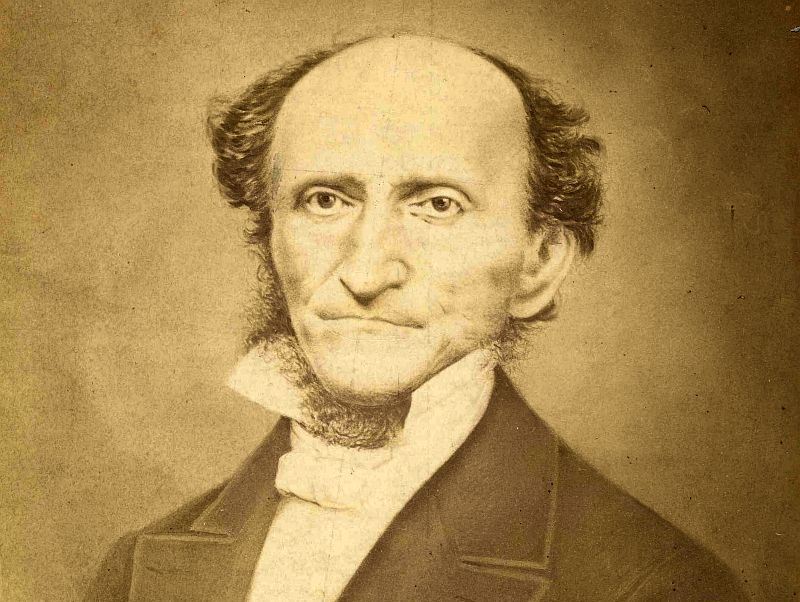
— Wilhelm Loehe
Lord, deal with us according to thy wisdom and mercy. Do not let the devil tempt us; but if we are to be tried, and must needs have a thorn in the flesh, let us keep thy grace and find it sufficient. Let our hearts be truly humble, that we may become more and more like thee, Lord Jesus. Amen.
When trials sore obstruct my way,
And ills I cannot flee,
Oh, let my strength be as my day!
Dear Lord, remember me!
If worn with pain, disease, and grief,
This feeble frame shall be,
Grant patience, rest, and kind relief:
Hear, and remember me!

Leave a Reply